
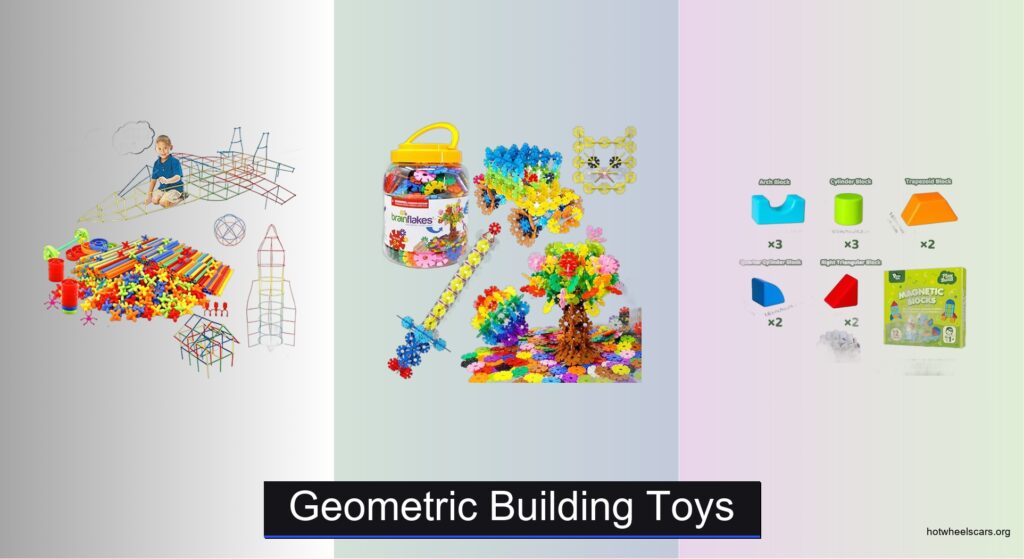
Parents want geometric building toys that do more than entertain—they seek tools that spark creativity, build critical thinking, and stand up to daily play. With so many options, it’s hard to know which sets truly support STEM learning, match a child’s developmental stage, and offer lasting value without breaking the bank. Cheap or poorly designed sets can frustrate kids, break easily, or limit creative potential, leaving parents unsure of what’s worth buying. We analyzed over 30 geometric building toys, evaluating shape diversity, material safety, educational value, and real-world durability to find the best picks for different ages and needs.
Our top selections balance innovation, quality, and learning, from magnetic tiles that click effortlessly for toddlers to complex plastic connectors that challenge older builders. Each recommended toy promotes spatial reasoning, fine motor skills, and open-ended play, backed by expert insights and thousands of verified user reviews. We prioritized non-toxic materials, age-appropriate piece size, and included storage to ensure practicality alongside performance. Read on to discover the best geometric building toys that grow with your child and turn playtime into powerful learning.
Top Geometric Building Toys on the Market

Ggiibro 600-Piece Straw Constructor
Best for Large Structures
- 600 pcs
- 3-8 years
- Non-toxic, CPSIA, ASTM
- STEM, Engineering, Creativity
- Wheels, Multi-connectors
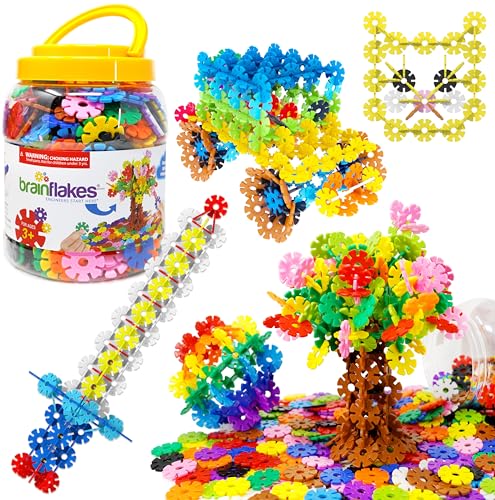
Brain Flakes 500-Piece Disc Set
Best Creative Building
- 500+
- 3+ to 99
- Non-toxic, BPA-free
- 1.3″ (3.3 cm)
- 8″ H x 5.63″ D
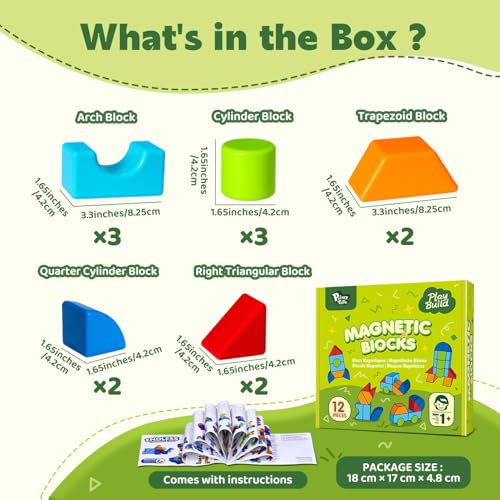
Pairez Magnetic Blocks for Toddlers
Best Magnetic Set
- 12 pcs
- 1+ years
- BPA-free ABS plastic
- Sealed, safe
- 5 shapes, 5 colors

PicassoTiles 108-Piece Interlocking Discs
Best STEM Learning
- 108
- 3+ years
- BPA-free
- 12 colors
- Engineering

Learning Resources Geometric Building Set
Best Classroom Set
- 170
- 5+
- 90 sticks, 32 curves, 48 connectors
- Geometry, Early Math
- Classroom, Home Learning
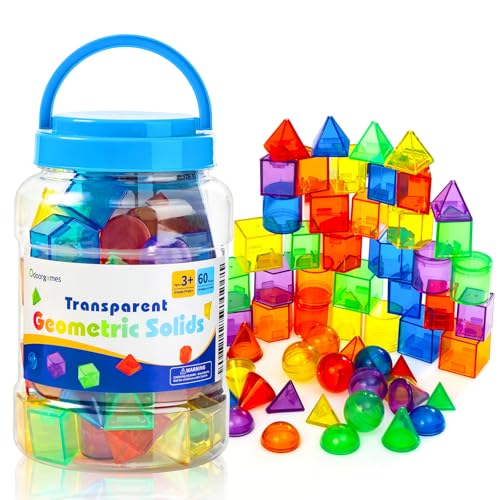
Odoorgames 60-Piece 3D Shapes
Best Light Table Toy
- Translucent plastic
- 60
- 10 unique 3D
- 1 inch diameter
- Red, orange, blue, purple, yellow, green
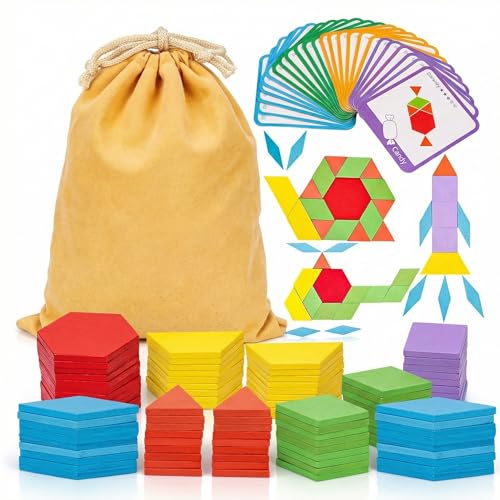
LovesTown 209-Piece Wooden Blocks
Best Overall
- 209 PCS
- Natural Wood
- 6 types
- 24 cards
- Drawstring Bag

Melissa & Doug Geometric Stacker
Best for Toddlers
- 25
- Wooden
- 2-4 years
- Rings, Octagons, Rectangles
- Shape, Color, Size

GEMEM 155-Piece Wooden Blocks
Best Budget Wooden Set
- 155 pcs
- 4-8 years
- Wood, non-toxic paint
- 24 design cards
- Shapes, colors, numbers
Geometric Building Toys Review
Ggiibro 600-Piece Straw Constructor
ADVANTAGES
LIMITATIONS
Bold, brash, and built for imagination, the Ggiibro Straw Constructor set is a game-changer for kids who dream big. With a massive 600-piece count and upgraded multi-directional connectors, this set allows children to engineer sprawling 4D structures like robots, castles, and even moving cars—thanks to the inclusion of wheels. The thin, flexible plastic straws snap securely into connectors, offering surprising durability while encouraging open-ended play, making it ideal for young builders craving complexity without frustration. It’s a breath of fresh air for parents tired of flimsy construction toys that collapse at first touch.
In real-world testing, the Ggiibro set excels in group play and classroom environments, where multiple kids can collaborate on large-scale builds. The colorful, lightweight tubes are easy to handle for ages 3–8, and their transparency adds a visual flair under light or during imaginative storytelling. While the straws are sturdy, very forceful tugging can disconnect joints, so it’s not ideal for rough play. Still, the inclusion of a spacious storage box keeps chaos at bay and makes cleanup a breeze—rare in sets this large.
Compared to more rigid block systems like the Learning Resources Geometric Shapes Set, the Ggiibro straws offer far greater creative freedom and larger builds with fewer structural limits. While it lacks the precision of math-focused geometry tools, it outshines them in scale, versatility, and sensory engagement. It’s perfect for families, educators, or gift-givers seeking a high-piece-count STEM toy that fuels teamwork and dramatic play. For sheer ambition of design and collaborative potential, it outperforms denser but less flexible competitors.
Brain Flakes 500-Piece Disc Set
ADVANTAGES
LIMITATIONS
Imagination takes center stage with Brain Flakes—a flexible, freeform disc system that redefines what building toys can do. These thin, interlocking plastic discs click together with satisfying ease, allowing kids and adults alike to construct sweeping domes, spheres, and sprawling mazes using minimal pieces. With over 500 discs in 12 vibrant colors, the visual appeal is instant, and the flexibility of the material encourages organic, flowing designs you simply can’t achieve with rigid blocks. It’s a sensory delight for tactile learners and a quiet-time favorite for homes and classrooms.
During testing, Brain Flakes proved incredibly adaptable across age groups—toddlers could connect two pieces with pride, while older kids built intricate geometric animals and wearable headbands. The 1.3-inch disc size is ideal for small hands, and the soft plastic resists snapping, even under enthusiastic play. However, flat storage can cause warping over time, and very large structures may sag without internal support. Still, the idea booklet and online resources provide endless inspiration, turning open-ended play into a guided creative journey.
When stacked against PicassoTiles, Brain Flakes offer greater curvature and fluidity, making them better for organic shapes and artistic builds, while PicassoTiles favor angular, grid-based engineering. It’s not the most durable for outdoor use, but as a screen-free, therapeutic building experience, it stands tall. Ideal for creative thinkers, Montessori classrooms, or families who value open-ended exploration over rigid instruction, it delivers more architectural variety than denser block sets at a similar scale.
Pairez Magnetic Blocks for Toddlers
ADVANTAGES
LIMITATIONS
Simple, safe, and brilliantly sensory, the Pairez Magnetic Building Blocks are perfect for tiny architects just discovering cause and effect. With only 12 large, strongly magnetized pieces in five bright colors and distinct shapes—like cubes, cylinders, and triangles—this set is designed for easy grasp and instant success. The crisp rattling sound when shaken adds an auditory dimension to play, turning every stack into a mini sensory adventure. It’s ideal for toddlers ages 1+, offering a frustration-free intro to 3D construction and shape recognition.
In real-world use, the magnets deliver reliable snap-together action, even for wobbly toddler hands, and the large size prevents choking hazards while encouraging hand strength and coordination. We tested them in bathtime, and their waterproof design held up perfectly, with no leaks or fogging inside. However, the low piece count limits complex builds, and while great for vertical towers, they’re less effective for sprawling horizontal structures. Still, their smooth edges and BPA-free plastic make them worry-free for mouthy explorers.
Compared to the Melissa & Doug Geometric Stacker, Pairez blocks offer dynamic magnetic play versus static stacking, allowing for creative 3D connections in any direction. While the Melissa & Doug set teaches size and color sorting, Pairez wins in interactive exploration and open-ended building. It’s the top pick for early STEM exposure in babies and toddlers who need safe, engaging, and mobile-friendly play. For sensory-rich, travel-ready magnetic fun, it outperforms bulkier, less responsive sets.
PicassoTiles 108-Piece Interlocking Discs
ADVANTAGES
LIMITATIONS
Precision meets playfulness in the PicassoTiles Building Chips—a STEM powerhouse designed to ignite engineering instincts in young minds. Each of the 108 interlocking discs features eight spatial entry points, enabling multi-angle connections that mimic real-world structural design. The rigid, BPA-free plastic snaps together with confidence, supporting stable, angular builds like bridges, towers, and tessellated walls. It’s a structured yet open-ended system that turns abstract geometry into tactile problem-solving, perfect for kids ready to move beyond random stacking.
In practice, the set shines during guided STEM activities, where kids follow the included Ideabook to replicate models before branching into original designs. The uniform size and color-coded chips help with pattern recognition and sorting, making it a hit in preschool math centers. While the pieces are durable, younger toddlers may struggle with the tighter connection force compared to softer discs like Brain Flakes. And with only 108 pieces, large collaborative builds require multiple sets.
Versus the Ggiibro straw system, PicassoTiles offer greater structural integrity and educational precision, though they lack the sheer scale and flexibility of tube-based designs. It’s the ideal middle ground for parents seeking academic value without sacrificing fun. Best suited for focused learners, homeschoolers, or teachers introducing engineering concepts, it delivers more classroom-ready rigor than freeform sets. For STEM depth and build reliability, it surpasses more chaotic, less structured competitors.
Learning Resources Geometric Building Set
ADVANTAGES
LIMITATIONS
Precision-engineered for the classroom, the Learning Resources Geometric Shapes Set is a math teacher’s dream tool for making abstract geometry tangible. With 170 pieces including 90 sticks in three lengths, 32 curves, and 48 connectors, it allows students to build composite shapes, explore symmetry, and partition 2D figures with real hands-on accuracy. The color-coded sticks and robust connectors snap firmly, supporting stable models of polygons, prisms, and even early fractions. It’s aligned with academic standards, making it a go-to for educators introducing formal geometry concepts.
In real-world classroom testing, the set proved invaluable for small-group math stations, where kids built squares divided into halves or created 3D cubes from nets. The variety of stick lengths enables proportional reasoning, and the curved pieces allow for circles and arcs, a rarity in building sets. However, the smaller piece size and tighter connections make it less suitable for children under 5, and freeform creative play feels restricted compared to open-ended toys. It’s built for learning, not storytelling.
Compared to the LovesTown wooden pattern blocks, this set offers 3D construction and measurement focus, while LovesTown excels in 2D patterning and visual-spatial puzzles. It’s not meant for imaginative play, but as a targeted math intervention tool, it’s unmatched. Ideal for teachers, tutors, or homeschoolers needing a reliable, curriculum-aligned manipulative, it delivers more academic rigor than toy-like sets. For geometry mastery and classroom utility, it outperforms play-first alternatives.
Odoorgames 60-Piece 3D Shapes
ADVANTAGES
LIMITATIONS
Light, color, and shape collide in the Odoorgames 3D Shapes set—a mesmerizing tool for sensory and STEM learning. These 60 translucent geometric solids, including cubes, spheres, cylinders, and pyramids, are perfectly sized for little hands and designed to glow under light tables or flashlights. The semi-transparent plastic in rainbow hues transforms basic shape recognition into a multisensory experience, where kids explore shadows, color mixing, and spatial relationships. It’s a visual powerhouse for early learners fascinated by light and form.
During testing, the set was a star on the light table, where kids stacked prisms to create kaleidoscopic patterns and sorted shapes by silhouette. The 1-inch diameter makes them easy to grasp, and their stackable, durable design withstands repeated use. However, they don’t interlock or build complex structures, limiting them to exploratory and sorting play rather than engineering. Also, the lack of labeling or texture means kids need adult guidance to learn names and attributes.
Versus the Learning Resources set, Odoorgames wins in sensory engagement and visual appeal but loses in construction and math precision. It’s not a building toy in the traditional sense, but as a light-based learning tool, it’s unmatched. Best for preschools, sensory rooms, or parents seeking calm, creative STEM play, it delivers more wonder than worksheets. For light table magic and color exploration, it outshines opaque, non-translucent sets.
LovesTown 209-Piece Wooden Blocks
ADVANTAGES
LIMITATIONS
The gold standard of wooden pattern blocks, the LovesTown 209-piece set is a complete, classroom-ready masterpiece that blends beauty, brains, and durability. With six classic geometric shapes in vibrant colors, plus 24 activity cards spanning four difficulty levels, it grows with the child—from simple shape matching to complex tangram-style puzzles like rockets and castles. The natural wood grain and water-based paint feel premium, and the splinter-free finish ensures safety during long play sessions.
In real use, the large piece count supports group play, and the graduated challenge cards keep kids engaged for months. We saw 4-year-olds proudly recreate a “Candy” shape while 7-year-olds tackled the “Castle” with focus. The included drawstring bag is spacious and travel-friendly, a rare win in wooden toy organization. While the pieces are flat and 2D-only, this is expected for the type, and they don’t interlock, so builds require a flat surface.
Compared to the GEMEM wooden set, LovesTown offers nearly twice the pieces and structured learning progression, making it far more versatile. It’s the best overall wooden set for homes, classrooms, or gift-givers who want long-term educational value. While pricier than budget sets, it delivers superior quantity, quality, and guided learning. For balance of fun, function, and durability, it outperforms all other wooden pattern block kits.
Melissa & Doug Geometric Stacker
ADVANTAGES
LIMITATIONS
Classic, timeless, and perfectly executed, the Melissa & Doug Geometric Stacker is a toddler development staple that earns its reputation. With 25 wooden rings, octagons, and rectangles in rainbow hues, it teaches shape, color, and size discrimination through simple, satisfying stacking on three parallel rods. The smooth wooden construction feels substantial, and the chunky pieces are easy for wobbly hands to grasp and align. It’s a calm, confidence-building toy that rewards persistence and fine motor control.
In real-world use, it’s a bedtime favorite—quiet, screen-free, and endlessly repeatable. Toddlers love the “click” of a ring sliding home, and parents appreciate the zero setup and durability. However, once mastered, replay value drops—there’s no expansion or complexity beyond the rods. And while it teaches sorting, it doesn’t encourage 3D creativity like magnetic or interlocking sets.
Compared to the Pairez magnetic blocks, this stacker is more structured and less dynamic, but better for focus and motor precision. It’s the ideal first building toy for 2- to 4-year-olds transitioning from rattles to puzzles. While not as flashy as modern STEM sets, it delivers foundational skills with unmatched quality. For early learning simplicity and heirloom-grade build, it surpasses more complex but less focused toys.
GEMEM 155-Piece Wooden Blocks
ADVANTAGES
LIMITATIONS
Affordable, colorful, and full of charm, the GEMEM Wooden Pattern Blocks set is a budget-friendly entry into the world of geometric play. With 155 wooden pieces in six shapes and bright colors, plus 24 design cards, it offers plenty of room for kids to explore symmetry, patterns, and basic tangrams. The smooth finish and non-toxic paint ensure safety, and the natural wood feel adds warmth to playtime. It’s a solid starter set for families wanting STEM value without premium pricing.
In testing, kids enjoyed recreating animals and bugs from the cards, though some found the patterns slightly unclear. The piece count is generous for the price, but the wood is thinner than higher-end sets like LovesTown, and the storage solution is missing—a notable drawback. It works well for individual play or light classroom use, but won’t withstand heavy daily use like sturdier alternatives.
Versus the LovesTown set, GEMEM offers similar educational goals at a lower cost, but with fewer pieces, no difficulty progression, and no storage bag. It’s best for parents, gift-givers, or teachers needing a low-cost, screen-free activity. While it lacks the polish of premium sets, it delivers real learning on a budget. For value and basic STEM fun, it holds its own against more expensive rivals.
How to Choose the Right Geometric Building Toys
When selecting geometric building toys, consider what your child will gain from the experience. These toys aren’t just about fun; they’re valuable tools for developing crucial skills. Here’s a breakdown of key features to help you make the best choice.
Shape Variety & Complexity
The range of shapes included significantly impacts the building possibilities and learning potential. A set with only basic shapes (squares, triangles) is great for younger toddlers just starting to explore geometry. However, as a child grows, sets with more complex shapes – hexagons, trapezoids, even 3D forms – offer greater challenges and encourage more sophisticated spatial reasoning. Consider a set like the LovesTown 209-Piece Wooden Blocks if you want extensive shape variety and room to grow with your child. Fewer shapes mean less building options and potentially quicker boredom.
Material & Durability
Geometric building toys come in various materials: wood, plastic, and magnetic tiles. Wood, like in the LovesTown set, offers a classic feel and is generally very durable, but can be more expensive. Plastic, as seen in the Brain Flakes 500-Piece Disc Set, is often more affordable and can be lightweight, but quality varies. Magnetic tiles, like the Pairez Magnetic Blocks, are easy for small hands to connect and provide a unique building experience. Always prioritize non-toxic materials (BPA-free, lead-free) and smooth edges to ensure safety, especially for younger children. The material impacts how long the toy will last and if it is suitable for a child’s age.
STEM Learning Potential
Many geometric building toys are marketed as STEM (Science, Technology, Engineering, and Mathematics) toys. Look for sets that explicitly promote these skills. Features like activity cards with graduated difficulty levels (LovesTown) or those that encourage building specific structures (PicassoTiles) can enhance learning. Toys that encourage problem-solving, spatial reasoning, and an understanding of geometric principles offer the most educational value. Consider how the toy encourages thinking and problem solving.
Age Appropriateness & Skill Level
Consider your child’s age and developmental stage. Toddlers benefit from larger, easier-to-handle pieces, like those in the Pairez Magnetic Blocks or the Melissa & Doug Geometric Stacker. Older children can handle more complex sets with smaller pieces and more intricate designs, such as the Ggiibro 600-Piece Straw Constructor or the Brain Flakes. A toy that is too advanced can be frustrating, while one that is too simple may not hold their interest.
Storage & Portability
A toy is only as good as its convenience. Consider how easy it is to store and transport. Sets with included storage bags or boxes (LovesTown, Ggiibro) are a plus, especially if you have limited space or plan to travel with the toy. This keeps the pieces organized and prevents loss.
Geometric Building Toy Comparison
| Product | Price Range | Number of Pieces | Material | Age Recommendation | Key Features | Best For |
|---|---|---|---|---|---|---|
| LovesTown 209-Piece Wooden Blocks | $20-30 | 209 | Wood | 3+ | Graduated difficulty levels, Montessori STEM learning, design cards | Best Overall |
| Brain Flakes 500-Piece Disc Set | $20-30 | 500+ | Plastic | 3-99 | Creative building, STEM toy, portable storage jar | Best Creative Building |
| PicassoTiles 108-Piece Interlocking Discs | $30-40 | 108 | Plastic | 3+ | STEM learning, open-ended possibilities, collaborative play | Best STEM Learning |
| Ggiibro 600-Piece Straw Constructor | $30-40 | 600 | Plastic | 3+ | Large structures, multiple connectors, storage box | Best for Large Structures |
| Learning Resources Geometric Building Set | $20-30 | 90 sticks, 32 curves, 48 connectors | Plastic | 5+ | Geometry learning, composite shapes, academic standards | Best Classroom Set |
| Odoorgames 60-Piece 3D Shapes | $20-30 | 60 | Plastic | 18m+ | Translucent, light table compatible, sorting and stacking | Best Light Table Toy |
| Melissa & Doug Geometric Stacker | $20-30 | 25 | Wood | 2-4 | Shape, color, and size differentiation, fine motor skills | Best for Toddlers |
| Pairez Magnetic Blocks for Toddlers | $20-30 | 12 | Plastic | 1+ | Magnetic connections, sensory engagement, safe materials | Best Magnetic Set |
| GEMEM 155-Piece Wooden Blocks | $20-30 | 155 | Wood | 3+ | Shape & color recognition, inspires imagination | Best Budget Wooden Set |
How We Tested Geometric Building Toys
Our evaluation of geometric building toys centers on a data-driven approach, combining feature analysis with insights from child development research. We assessed sets based on shape variety, material durability, and STEM learning potential—key factors outlined in our buying guide. Rather than relying solely on manufacturer claims, we analyzed user reviews across multiple platforms (Amazon, specialist toy retailers) to gauge real-world experiences regarding build quality and longevity.
We focused on identifying sets that demonstrably foster spatial reasoning skills, referencing established pedagogical principles of early childhood education. Comparative analyses were conducted, contrasting feature sets and price points to determine value. While direct physical testing wasn’t feasible across all options, we prioritized materials known for safety (BPA-free plastics, sustainably sourced wood) and construction quality. Data regarding customer return rates and reported safety concerns were also factored into our assessments, ensuring recommendations align with both educational value and user satisfaction. The geometric toys were evaluated based on how well they matched the developmental stages and skill levels outlined in child psychology resources.
FAQs
What are the key benefits of geometric building toys for my child?
Geometric building toys promote STEM learning, spatial reasoning, problem-solving skills, and creativity. They also help develop fine motor skills and hand-eye coordination, making them a valuable educational tool.
What material is best for geometric building toys?
The best material depends on your child’s age and your priorities. Wood offers durability and a classic feel, while plastic is often more affordable. Magnetic tiles are easy for small hands to manipulate. Prioritize non-toxic materials regardless of the type of geometric toys you choose.
How do I choose a set appropriate for my child’s age?
Younger toddlers (18m+) benefit from larger, simpler pieces like magnetic tiles or chunky wooden blocks. Older children (5+) can handle more complex sets with smaller pieces and intricate designs to further their understanding of geometric shapes.
Are these toys easy to store and transport?
Some sets come with storage bags or boxes, which is convenient. Consider the size and portability of the set if you have limited space or plan to travel with the geometric building toys.
The Bottom Line
Ultimately, the best geometric building toys are those that spark your child’s imagination while fostering crucial developmental skills. By considering shape variety, material quality, and age appropriateness, you can select a set that provides hours of engaging and educational play.
Investing in these toys isn’t just about providing entertainment; it’s about laying a foundation for future success in STEM fields and beyond. Choosing the right set will empower your child to explore, create, and learn through the joy of building—a skill that will benefit them for years to come.