
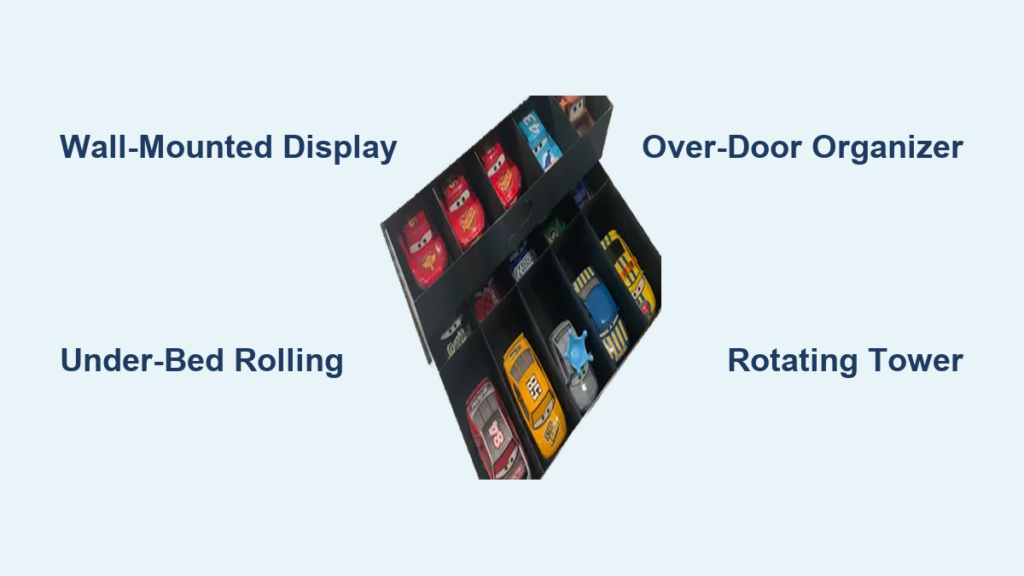
Your living room floor has transformed into a miniature metropolis of Matchbox vehicles, Hot Wheels, and toy trucks. Cars wedge between couch cushions, hide under furniture, and mysteriously multiply overnight. If you’re constantly tripping over tiny vehicles or spending more time searching for missing cars than playing with your child, you need storage solutions that work with your family’s real-life chaos. These practical toy car storage ideas help you reclaim your space while keeping kids engaged in cleanup.
Most parents settle for generic toy bins that become overflowing graveyards for beloved vehicles. But toy cars deserve better organization than getting tossed into a dark abyss where favorites disappear forever. Whether you’re managing a handful of daily drivers or a growing collection that rivals a dealership showroom, these targeted storage strategies create systems your child will actually use. You’ll discover solutions for small apartments, collector-worthy displays, and quick-clean routines that transform the nightly toy battle into independent play habits.
Measure Your Car Collection Before Buying Storage
Jumping straight to Pinterest-perfect solutions often backfires when storage doesn’t match your actual collection size. Empty every car from couch cushions, under beds, and forgotten corners. Sort by size—matchbox cars need different storage than larger police cars or dump trucks. Count your total: under 30 vehicles need simple organization, while 50+ collections require layered systems. This inventory prevents wasted money on storage that’s too small or impractical for your space.
Document Your Available Storage Zones
Grab a tape measure to identify realistic storage locations most parents overlook. Under-bed clearance typically offers 6-8 inches of height—perfect for shallow rolling bins. Wall spaces above doorways or in hallways create vertical storage opportunities. Closet floors provide 12-18 inches of vertical space ideal for stacked bins. Even narrow gaps between furniture can hold slim organizers. Measuring first ensures storage solutions fit your actual space rather than Pinterest dreams.
Match Storage Height to Your Child’s Age
Three-year-olds can’t safely reach high shelves, but seven-year-olds get frustrated with floor-level bins. Position daily-use cars at your child’s waist height where they can access vehicles independently. Reserve higher shelves for special collections or overflow storage you control. Test potential storage spots with your child present—can they open containers easily? If they struggle with latches or zippers, they won’t maintain the system. The right height encourages ownership of cleanup routines.
Wall-Mounted Display Solutions That Double as Decor

Floor space disappears fast in playrooms, but vertical storage transforms walls into functional car garages. These solutions work especially well in small apartments where every square inch counts, turning toy chaos into intentional room design.
Magnetic Strip Parking System
Install 2-inch magnetic strips along bedroom walls at child-friendly heights. Metal-bodied Hot Wheels and similar cars stick instantly without damaging walls. Arrange strips in racing track patterns or straight lines—each 24-inch strip holds 8-10 cars, making the entire collection visible at a glance. Use removable adhesive strips for rental-friendly installation, or screw-mounted versions for permanent setups. Add small labels beneath strips to organize cars by color or type, helping kids return vehicles to their proper spots.
Picture Ledge Racing Shelves
Floating picture ledges create perfect car display shelves at the perfect height for small hands. Install 3-4 inch deep ledges in staggered patterns for visual interest. Cars park nose-first against the back edge, staying secure while remaining visible. This method showcases 15-20 cars per 36-inch shelf—ideal for prized collections your child wants to show off. The open design encourages kids to display favorites rather than tossing them into bins.
Customizable Pegboard Garage
Mount a 2×3 foot pegboard panel painted to match room decor and add various hooks and baskets. Small hooks hold individual cars by their wheels, while larger baskets corral groups by theme. The modular system grows with collections—simply rearrange hooks as your child’s interests change. Add racing stripe details with painter’s tape for extra flair that makes storage part of playtime.
Under-Bed Rolling Storage That Stays Accessible
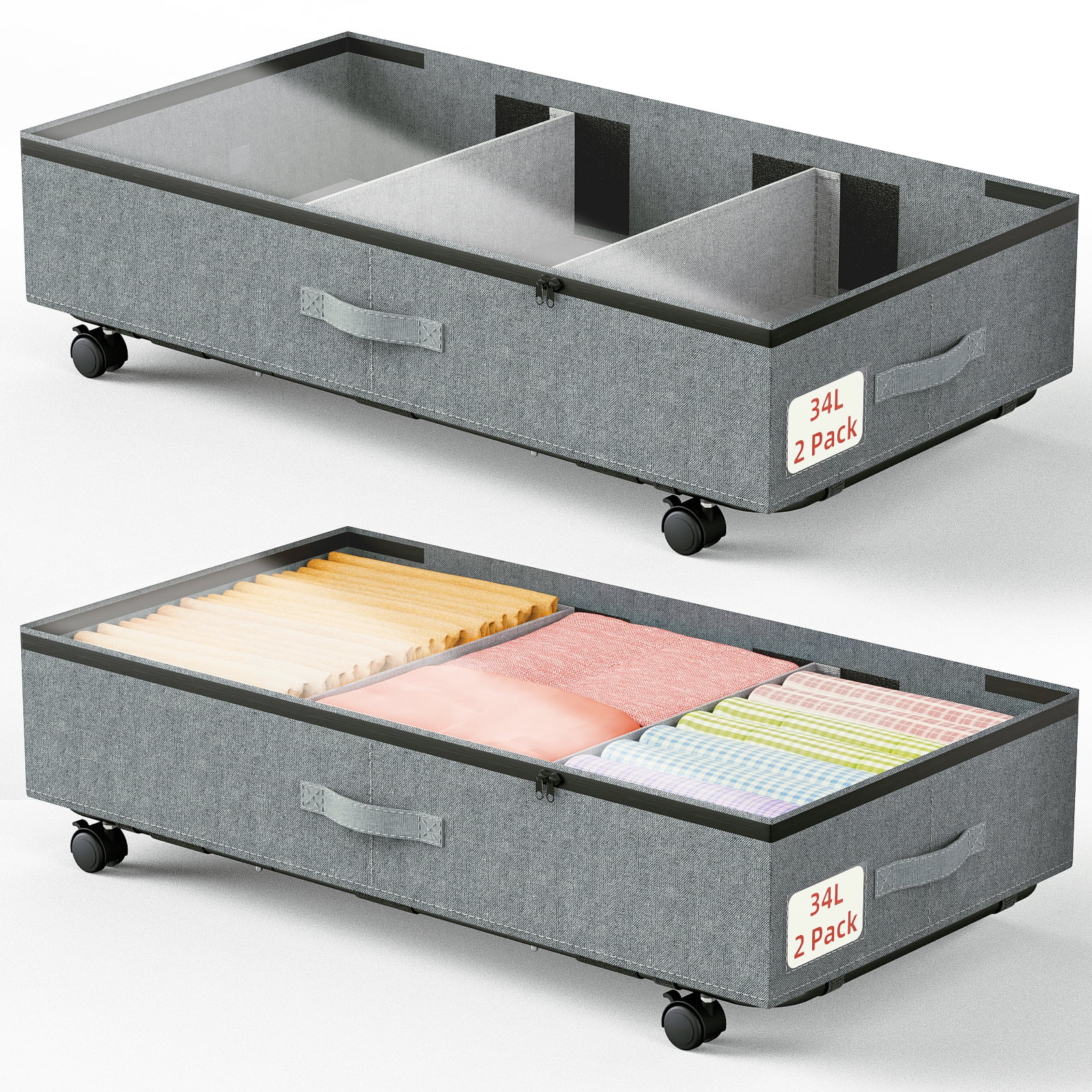
That empty space under beds hides valuable real estate for toy car storage. Rolling systems keep cars dust-free while remaining accessible for daily play, solving the “out of sight, out of mind” problem of traditional storage.
Clear Rolling Drawers with Dividers
Purchase under-bed storage drawers with clear fronts for instant visibility. Look for models with smooth-gliding wheels and 4-6 inch height clearance. Inside, use small plastic containers or adjustable dividers to separate cars by type—police cars here, race cars there. Label each section with picture labels for non-readers, turning storage into a matching game. These drawers slide out easily for quick access yet disappear completely when pushed back under the bed.
DIY Rolling Car Crates with Custom Sections
Build simple wooden crates sized to fit under your specific bed with 2-inch caster wheels. Add dividers from thin plywood or sturdy cardboard to create dedicated sections for different vehicle types. One 30x20x6 inch crate holds 50-75 matchbox cars when organized efficiently. Sand edges smooth and paint with non-toxic paint for a personalized touch. This beginner-friendly project takes 2-3 hours and creates storage that perfectly matches your space constraints.
Over-the-Door Organizers for Instant Parking
The back of any door becomes prime storage real estate with the right organizer. These solutions work in closets, bedrooms, or playroom entrances, keeping cars contained without eating floor space.
Shoe Organizer Car Garage
Standard over-door shoe organizers with clear pockets create perfect individual parking spots. Each pocket holds 2-3 matchbox cars or one larger vehicle. Kids see every car option while keeping floors clear. Use top rows for parent-controlled storage of special collections and lower rows for everyday access. The transparent pockets prevent the “lost toy” syndrome where cars disappear into dark bins.
Fabric Pocket Car Display
Sew or purchase fabric organizers with car-sized pockets made from sturdy canvas or denim. Add embroidered labels or appliques to designate parking spots for favorite cars. These softer organizers work well on nursery doors or inside closet doors, creating a cozy garage atmosphere. Unlike plastic organizers, fabric versions absorb sound when cars get tossed in during cleanup time.
Rotating Storage Towers That Maximize Space
These spinning storage solutions bring cars to your child’s level while holding huge collections in minimal footprint. Perfect for corners or against walls, they solve the “reaching to the back” problem of traditional shelves.
Lazy Susan Car Display
Mount a 12-18 inch lazy susan base inside a cube storage unit with 3-4 inch sides to prevent cars from sliding off. The rotating base lets kids access cars from all sides without reaching deep into shelves. One 18-inch diameter holds 60-80 cars arranged in circular patterns. Kids love spinning the display like a real car dealership, making cleanup feel like play rather than work.
Tiered Carousel Systems
Create a multi-level carousel using stacked cake stands or lazy susan units. Each tier stores different car sizes—small cars on top, medium in middle, large vehicles on bottom. Paint each tier in contrasting colors for visual organization. The entire system spins, making every car accessible within seconds. This works particularly well for collectors who categorize vehicles by size or type.
Clever Repurposed Storage Solutions on a Budget

Everyday household items transform into character-filled toy car storage with minimal effort. These budget-friendly solutions add personality while solving specific storage problems.
Rain Gutter Racing Tracks
Cut vinyl rain gutters into 2-3 foot sections and mount them horizontally as floating car shelves. The curved shape cradles cars perfectly while creating authentic racing vibes. Paint gutters bright colors or metallic silver for extra visual appeal. One 36-inch gutter holds 20-25 cars in single file—ideal for display near play areas. The open design encourages kids to take cars directly from the “track” to the playmat.
Tool Box Car Carriers
Metal tool boxes with customizable compartments create portable car storage. Remove plastic tool holders and replace with foam inserts cut to car shapes. Kids carry their collection to grandparents’ houses or backyard races easily. Look for boxes with secure latches and comfortable handles—many dollar stores carry perfect options. This solution teaches kids to care for their collection like a real mechanic.
Daily Maintenance Strategies That Stick
Even perfect storage fails without simple maintenance routines. Create 5-minute habits that keep systems working long-term without constant parental oversight.
Two-Minute Tidy Race Games
Set timers for two-minute races to put cars away before transitions like meals or bedtime. Kids compete against their own best times or siblings. Use cleanup songs with car-themed lyrics (“Vroom vroom, put them away!”) to make cleanup automatic. This transforms chores into games, building organizational habits that last beyond toy cars.
Parking Spot Accountability System
Assign each car a numbered parking spot using small round labels. Create a master list showing which car belongs where—helpful for teaching responsibility. Use this method for prized collections or cars with special meaning. Kids learn to return cars to exact spots, maintaining organization longer. The system grows with your child’s cognitive development from simple matching to numbered organization.
Seasonal Collection Rotation
Store half your collection in sealed bins and rotate cars seasonally. Winter months might feature snowplows and emergency vehicles, while summer brings convertibles and beach cruisers. This keeps storage manageable while maintaining excitement about “new” toys every few months. The rotation process becomes a special bonding activity where you and your child review favorites together.
Transforming toy car chaos into organized bliss starts with one solution addressing your biggest pain point—maybe wall-mounted displays for prized cars or rolling bins for daily play. Test it for two weeks, adjust based on your child’s response, then expand the system gradually. The goal isn’t perfection but creating a sustainable system your family actually uses. Those tiny cars will keep multiplying, but with these practical strategies, you’ll stay ahead of the invasion while teaching valuable organization skills that last a lifetime. Remember: storage that works for your child’s age and your space constraints beats Pinterest-perfect solutions that gather dust in the closet.