
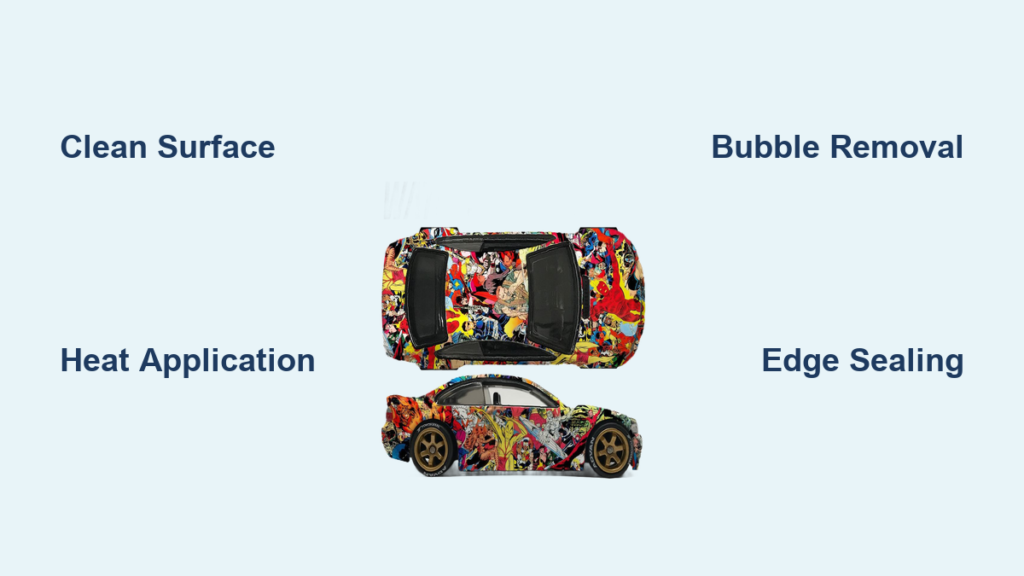
Your Hot Wheels collection deserves more than factory paint—vinyl wrapping transforms scratched treasures into showpiece originals while preserving their collector value. Mastering how to wrap a hot wheels car unlocks endless design possibilities, from restoring childhood favorites to creating limited-edition race replicas. This hands-on guide reveals professional techniques for 1:64 scale wrapping, whether you’re repairing battle damage or designing custom liveries. You’ll learn why automotive-grade vinyl beats craft store alternatives and discover the exact tools needed for bubble-free application on compound curves. By the end, you’ll confidently execute everything from single-color wraps to intricate multi-element designs.
Essential Wrapping Materials
Precision Cutting Tools That Make or Break Results
Dull blades cause catastrophic vinyl tears on tiny surfaces—always use a fresh X-Acto #11 blade for crisp cuts. Your self-healing cutting mat must measure at least 12×18 inches to accommodate templates, while fine-tipped scissors handle initial sheet trimming. The critical secret? A circle template scaled precisely for 1:64 wheel openings (typically 3.5mm diameter). Never substitute regular scissors; their blunt tips snag vinyl edges during final trimming, creating visible flaws under display lighting.
Application Toolkit for Flawless Adhesion
Skip the hairdryer—mini heat guns with 120-140°F settings activate vinyl adhesive without melting plastic chassis. Pair this with a felt-edged squeegee that applies even pressure without scratching. Fine-point tweezers become indispensable when positioning sub-3mm details like headlights, while low-tack masking tape holds graphics in place during alignment. Crucially, use only model-grade clear coat like Tamiya TS-13; automotive clear will dissolve thin vinyl edges during application.
Quick Disassembly Steps
Removing Riveted Wheels Without Damage
Identify rivet types first: older Hot Wheels feature single-pin rivets, while modern releases use dual-pin designs. Clamp the chassis vertically in a third-hand tool, then carefully drill rivet heads with a 1/16″ bit at 500 RPM—excessive speed melts plastic. For screw-mounted wheels (common on Premium series), remove the 0.8mm chassis screw using a precision jeweler’s screwdriver. Store axles in compartmentalized trays; losing one 2mm axle ruins reassembly.
Safely Separating Metal Bodies from Chassis
Insert plastic spudgers along the body seam near suspension towers to avoid paint chips. Work clockwise around the chassis, applying equal pressure at 2-inch intervals. Photograph spring placements before removal—many 2010+ models hide micro-springs under hoods. Never pry at wheel wells; these thin metal sections crack instantly. If resistance occurs, reapply isopropyl alcohol to dissolve old adhesive before continuing.
Surface Preparation Secrets
Deep Cleaning for Bubble-Free Results
Soak bodies in warm water with a drop of Dawn dish soap for exactly 15 minutes—longer weakens metal integrity. Gently scrub adhesive residue using a child’s soft-bristle toothbrush, focusing on recessed areas like grilles. Degrease with 91% isopropyl alcohol on cotton swabs; lower concentrations leave moisture that causes lifting. Air-dry horizontally on microfiber for 30 minutes minimum—any trapped moisture creates vapor bubbles under vinyl.
Fixing Imperfections Before Wrapping
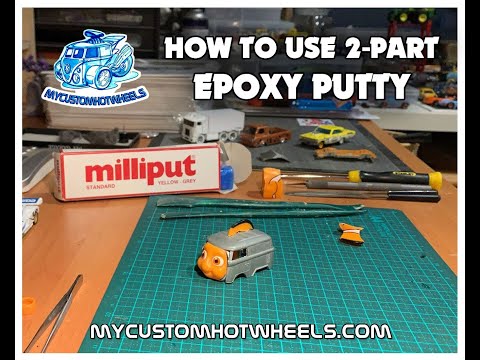
Lightly sand casting seams with 1000-grit paper in circular motions until smooth. For deep scratches, apply Tamiya Liquid Putty with a toothpick, then cure under UV lamp for 90 seconds. Prime bare metal spots with Mr. Surfacer 1000 using one mist coat—thick primer fills panel gaps that telegraph through vinyl. Always inspect under 10x magnification; what’s invisible to the naked eye becomes glaring post-wrap.
Vinyl Application Mastery
Basic Wrapping Method for Beginners
Cut vinyl 1cm oversized on all sides using your sharpest blade. Position the center over the hood, then use the squeegee in overlapping “J” strokes toward edges—never circular motions that trap air. Activate adhesive with 3-second heat bursts from 6 inches away. For compound curves like fenders, stretch vinyl incrementally: heat, stretch, squeegee, repeat. Rushing this process causes irreversible wrinkles; budget 20 minutes per side for perfect results.
Advanced Curve Techniques for Complex Bodies
Master concave areas like trunk lids with strategic relief cuts: make 1-2mm incisions at the deepest curve point, then overlap the flaps like shingles. For sharp edges (e.g., hood seams), pre-stretch vinyl by warming it while gently pulling toward edges before application. Wheel openings demand surgical precision—trace the actual wheel onto vinyl, then cut in one fluid motion with a fresh blade held perpendicular to the surface.
Window and Detail Work
Creating Show-Quality Window Masks
Cut window templates from masking film using your exact body outline. Secure with micro-tape pieces at 12 o’clock positions, not edges. When trimming vinyl to windows, use a blade tilted at 45 degrees for clean cuts. Seal edges with Tamiya Clear Part Cement applied via syringe—this prevents moisture ingress that causes peeling. Never skip this step; unsealed windows lift within weeks.
Adding Micro-Scale Lighting Details
Create headlights by cutting 2.5mm white vinyl circles, then layering 2mm clear amber vinyl on top. Apply using a toothpick dipped in water for controlled placement. For taillights, use a needle to position 3.5mm red vinyl shapes before sealing with clear coat. Key tip: Apply lights before main body wrap—they’re impossible to position accurately over finished vinyl.
Troubleshooting Common Problems

Eliminating Air Bubbles Like a Pro
Prevent bubbles by squeegeeing from center outward at 45-degree angles. If bubbles persist, puncture with a 0.2mm sewing needle, then press air toward the hole using tweezers. For stubborn bubbles under curves, reheat the area and stretch vinyl taut with tweezers before resealing. Never ignore bubbles—they expand under display lighting and become permanent flaws.
Fixing Lifting Edges Permanently
Reheat lifted edges for 5 seconds, then press with a rounded burnishing tool while cooling. For recurring lifts, apply a microscopic drop of Zap-A-Gap glue under the edge using an exacto knife tip. Prevention is better: always clean edges with alcohol-soaked swab before final sealing. Lifting almost always stems from residual oils—not adhesive failure.
Reassembly and Final Inspection
Component Reinstallation Checklist
Before reattaching wheels, verify clearance by rolling the body over a flat surface—wrapped fenders must clear tires by 0.5mm. For riveted models, use replacement rivets from Hot Wheels Service Center kits. Apply Loctite 222 threadlocker to chassis screws; standard threadlocker seeps onto vinyl. Always reinstall springs in original orientations—reversed springs cause visible panel gaps.
Professional-Grade Quality Control
Inspect under 5000K LED lighting from multiple angles; bubbles and lifts hide under warm light. Check wheel wells for excess vinyl that rubs tires during rolling. Test all edges with a fingernail—properly sealed vinyl won’t lift. Finally, photograph your wrap next to unwrapped reference images; this reveals subtle misalignments invisible during work.
Maintenance for Longevity
Cleaning Methods That Preserve Your Wrap
Dust removal requires compressed air at 15 PSI max—higher pressures force debris into vinyl pores. For smudges, use a microfiber cloth dampened with distilled water only; tap water leaves mineral deposits. Never use alcohol-based cleaners—they degrade vinyl plasticizers within months. Store wrapped cars in acrylic cases with UV-filtering glass; direct sunlight fades wraps in 6 months.
Preventing Catastrophic Damage
Maintain 70°F storage temperature—extreme cold makes vinyl brittle while heat accelerates adhesive failure. Always handle wrapped cars by the chassis, not body panels. For travel, wrap each car individually in acid-free tissue paper inside rigid containers. Monthly inspections catch edge lifting early; reseal with heat gun before damage spreads. Remember: your wrap’s lifespan depends entirely on these maintenance habits.
Pro Tips for Perfect Results
Speed vs. Precision: Finding Your Balance
Simple single-color wraps take 35 minutes with practice, but complex race liveries demand 5+ hours across multiple sessions. Start with damaged cars—your first three wraps will have flaws. Replace blades after every 20 cuts; dull tools cause costly mistakes on tiny surfaces. Work under 3x magnification for details under 3mm; it doubles accuracy without slowing you down.
Avoiding Costly Beginner Mistakes
Rushing surface prep causes 90% of wrap failures—spend 40% of your time cleaning. Never use craft vinyl; its adhesive lacks flexibility for compound curves. Scale matters: racing stripes over 3mm look cartoonish on 1:64 scale. Most crucially, design in reverse—what you see on paper appears mirrored when applied. Practice templates on scrap vinyl until alignment is perfect.
Your wrapped Hot Wheels car now boasts professional-quality customization that protects original castings while expressing your unique style. Whether you’ve restored a childhood treasure or created a custom race replica, these techniques scale from basic wraps to gallery-worthy art. Remember that mastery comes through patient practice—each wrap teaches new nuances of heat control and precision handling. Start with single-color projects, then advance to multi-element designs as your skills grow. The true joy lies in transforming ordinary die-casts into personalized showpieces that spark conversations and stand the test of time. Now that you know how to wrap a hot wheels car correctly, your collection’s potential is limited only by your creativity.