You’ve carefully curated your Hot Wheels collection but face the critical collector’s dilemma: break the seal or preserve mint condition? If you’ve chosen to display Hot Wheels cars in package, you’re protecting both financial value and the nostalgic artwork that transforms each card into a miniature time capsule. This guide reveals professional techniques to transform sealed blister packs into stunning visual displays without compromising integrity. Within weeks, you can create museum-quality arrangements that highlight packaging evolution from vintage 1968 Redlines to modern Treasure Hunts while maintaining optimal preservation conditions.
Preserving original packaging isn’t just about potential investment returns—current market data shows sealed premium series cars often appreciate 200-300% faster than opened equivalents. The vibrant card art and historical context tell Hot Wheels’ story in ways loose vehicles never can. Whether you’re starting with 50 cars or managing 500+, these field-tested methods solve the core challenges collectors face: preventing UV damage, eliminating dust accumulation, and creating visual flow without risking packaging integrity during installation.
Wall-Mounted Display Systems That Protect Sealed Packaging
Pegboard Organization for Flexible Blister Pack Display
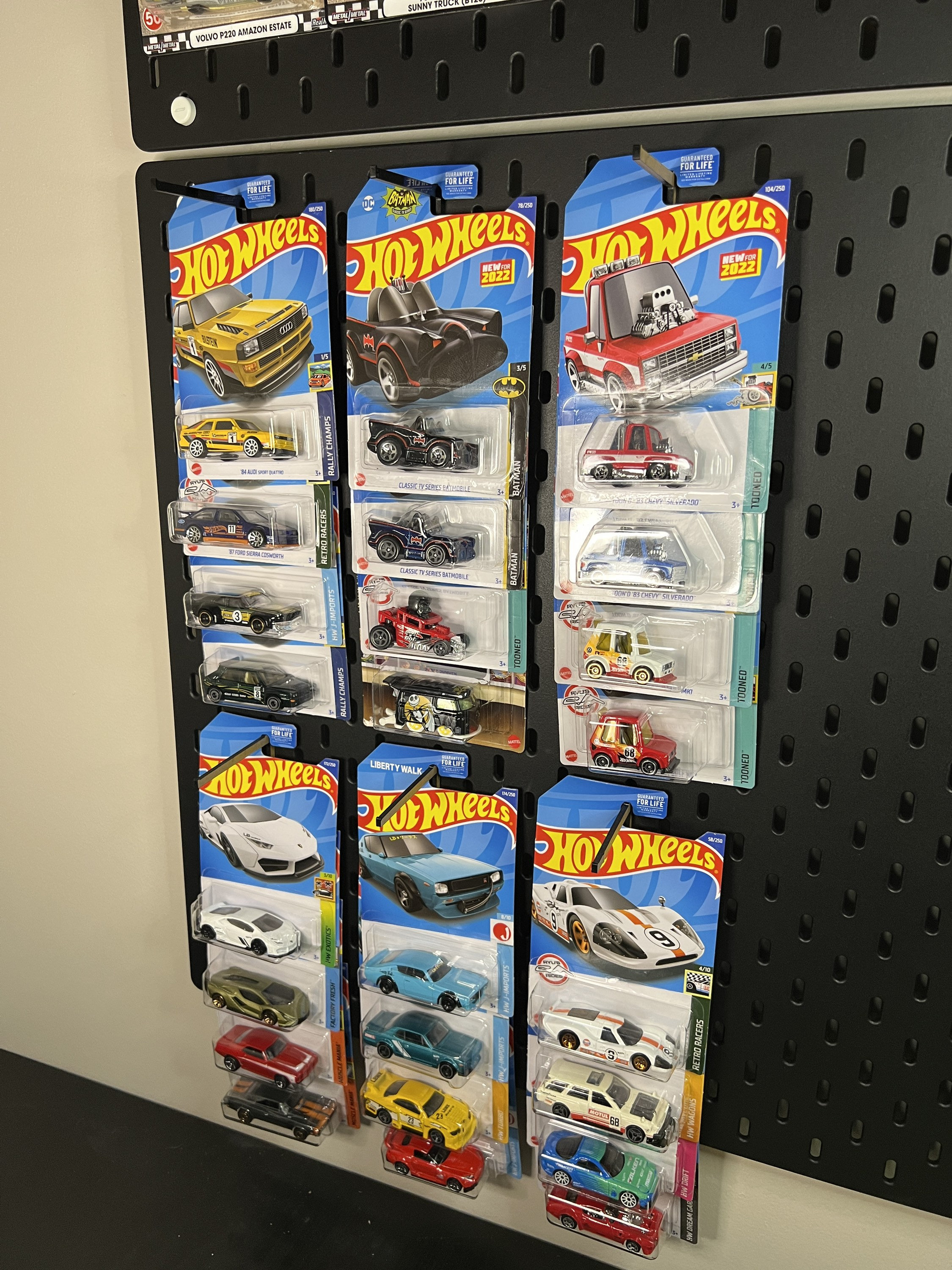
Transform any wall into a scalable Hot Wheels gallery using standard pegboard—the 1-inch grid spacing perfectly matches blister card hooks. This system handles 50+ sealed cars (each weighing 2.5-3.5 ounces) when mounted to wall studs with 2½” wood screws. Critical installation tip: Paint your pegboard matte black to make 1960s-era card art pop while minimizing glare during viewing.
Optimize your pegboard setup:
– Create color-coded sections using removable electrical tape strips
– Space hooks 4-6 inches apart for clear visibility of card details
– Reserve bottom rows for frequently rotated cars to reduce handling stress
– Install acrylic barriers along the bottom edge to prevent accidental bumps
Floating Shelf Solutions with Integrated LED Lighting
Single-row floating shelves (3-4 inches deep) display 10-15 sealed Hot Wheels per linear foot while protecting packaging from UV damage. For maximum visual impact, install 12V LED strips at 45-degree angles above each shelf using 4000K-5000K temperature bulbs that render card colors accurately without heat damage. Avoid this common mistake: Placing lights directly above blisters creates glare that obscures packaging details—always angle illumination downward at 45 degrees.
Cabinet and Case Displays for Premium Protection

IKEA Detolf Modifications for Museum-Quality Presentation
The IKEA Detolf glass cabinet (16⅝” × 14⅝” shelves) holds 50-75 carded cars per shelf when arranged in stepped rows using 2-inch acrylic risers. This setup solves the #1 complaint among collectors: back-row cars becoming invisible in deep displays. Pro installation sequence:
1. Mount LED strips along interior vertical supports
2. Install UV-filtering acrylic risers (UF-3 or higher rating)
3. Position heaviest premium packages (like Metal Cases) on bottom shelves
4. Add magnetic closures to glass doors for easy access
Custom Acrylic Cases for High-Value Sealed Collections
For Treasure Hunts or convention exclusives, stackable 12″×8″×6″ acrylic cases provide archival protection. Specify UV-filtering acrylic with ¼” ventilation gaps to prevent moisture buildup inside sealed environments. Essential features to include:
– Magnetic closures that won’t stress packaging during access
– Desiccant compartments with silica gel packets (replace quarterly)
– Rounded interior edges to prevent blister scratches during insertion
– Stackable design allowing vertical expansion as your collection grows
Critical Protective Display Considerations

UV Light Management for Packaging Preservation
Sunlight destroys Hot Wheels packaging faster than any other factor—visible fading occurs within 6 months of direct exposure. Implement this protection protocol immediately:
– Position all displays at least 10 feet from windows
– Apply UV-filtering film (minimum 99% blockage) to nearby glass
– Use only LED lighting (traditional bulbs emit damaging UV)
– Install motion-sensor lights to limit exposure time
Monthly check: Use a $20 UV meter to verify levels stay below 75 microwatts/lumen—a threshold where card colors begin deteriorating within 12 months.
Humidity Control Systems for Cardboard Integrity
Cardboard packaging warps when humidity exceeds 45%—a frequent issue in basements where daily fluctuations often exceed 15°F. Create a stable microclimate:
– Place silica gel packets (with humidity indicator cards) in enclosed displays
– Maintain 35-45% relative humidity using portable dehumidifiers
– Avoid attics where summer temperatures regularly hit 90°F+
– Rotate cars quarterly between display and acid-free storage boxes
Warning: Never use spray-on anti-static treatments near sealed packaging—they can seep through microscopic blister seams and damage card art.
Organizational Systems That Enhance Visual Impact
Series-Based Arrangements for Logical Flow
Group sealed cars by series to create visual storytelling. Mainline cars should progress chronologically by year (check case codes on card backs), while premium series like Car Culture deserve dedicated sections. Maximize display effectiveness with:
– Color-coded dots matching Hot Wheels’ official series system
– QR codes linking to digital catalogs (scan to see production details)
– Small whiteboards for tracking new additions without permanent labels
– Dedicated zones for error cars and regional variations
Thematic Groupings That Tell Stories
Transform static displays into dynamic narratives through creative arrangement. A rainbow progression (red to violet) creates stunning visual rhythm, while manufacturer groupings highlight real automotive partnerships—like lining up all Ford Mustang Hot Wheels cards. For historical context, create decade-themed sections showing packaging evolution from 1960s Redlines to modern graphics.
Budget-Friendly Display Solutions Under $100
DIY Pegboard System Setup Guide
Start your Hot Wheels cars in package display for under $50 with these steps:
1. Cut 2’×4′ pegboard to size ($15 at hardware stores)
2. Paint with matte black spray paint ($8)
3. Mount to wall studs using four 2½” screws ($5)
4. Add 50 hooks ($10) and electrical tape dividers ($2)
This system accommodates 50+ sealed cars while allowing reconfiguration as your collection grows—no tools required for adjustments. Time investment: 90 minutes for complete installation.
Thrift Store Bookcase Conversion
Repurpose a $20 IKEA Billy bookcase into a stepped display using $30 worth of acrylic risers. Cut ¼” acrylic sheets into 2-inch tall wedges to angle cards forward, eliminating the need to remove cars for viewing. Install LED strips along vertical supports for professional lighting ($15). Total cost: $65 for 150-car capacity.
Final Preservation Protocol
Your sealed Hot Wheels collection represents decades of automotive culture frozen in time. Before installing any display, photograph every card’s condition for insurance documentation and implement monthly UV/humidity checks. Never open premium packaging—even “mint condition” errors lose 40-60% of value when breached. Start with a single pegboard section this weekend, then expand into climate-controlled cases as your collection grows. Remember: the ultimate goal isn’t just showing off cars, but preserving the vibrant artwork and historical context that makes each sealed package a miniature museum piece. Rotate displays seasonally using your QR-coded catalog, and your Hot Wheels collection will tell its story for generations while maintaining maximum collectible value.