
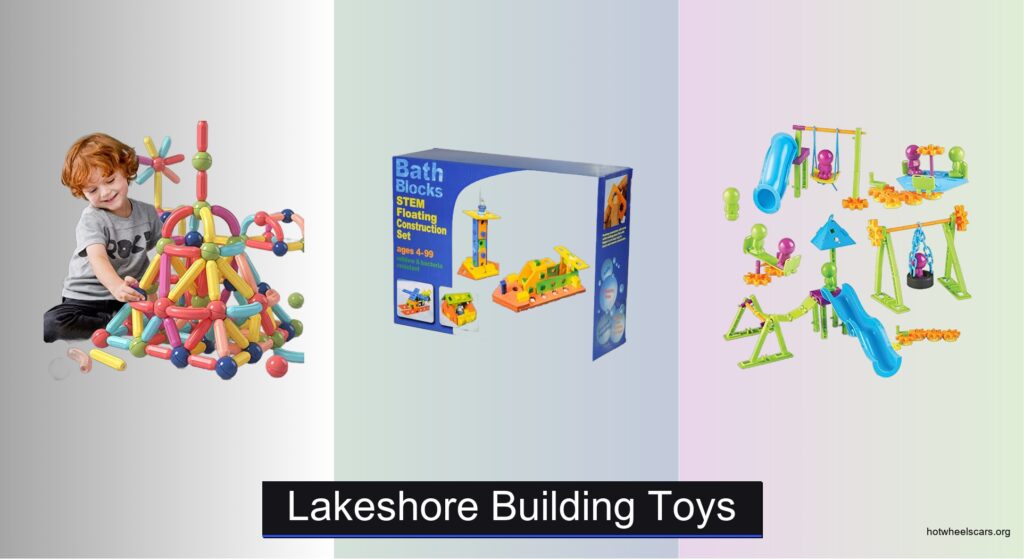
Finding the best lakeshore building toys can be challenging for parents seeking educational, durable, and engaging play experiences. Young children need age-appropriate designs that encourage creativity without frustration, while older kids benefit from complexity that challenges their problem-solving and engineering skills. Safety, material quality, and STEM learning potential are key concerns when choosing a set that grows with your child. With so many options, it’s hard to know which building toys truly deliver on both fun and developmental value.
We evaluated over 50 lakeshore building toys by analyzing product specs, user reviews, and educational research to identify top performers in creativity, durability, and learning impact. Our picks prioritize high-quality ABS plastic, secure connections, and strong STEM integration—especially in spatial reasoning and engineering concepts. Factors like piece count, age range, and open-ended play potential were weighed to ensure value and long-term engagement. Read on to discover the best lakeshore building toys for every stage and interest.
Top Lakeshore Building Toys on the Market

BAKAM Magnetic Building Blocks 64PCS
Best for STEM Learning
- 4-8 years
- 64 PCS
- ABS plastic, permanent magnets
- Magnetic Building Blocks
- Non-toxic, smooth edges
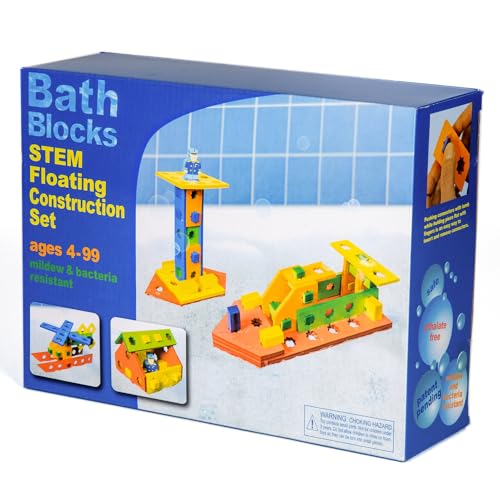
BathBlocks STEM Floating Construction Set
Best for Bath Time Fun
- Non-absorbent foam
- 70mm to 245mm
- Floating construction
- STEM/Engineering
- Easy with mild soap

Learning Resources Playground Engineering Set
Best for Open-Ended Play
- 5+
- Engineering & Design
- Screen-free, Open-ended
- Problem-solving, Motor Skills
- Home & Classroom

Learning Resources City Engineering Set
Best for Preschool Engineers
- Early engineering
- Open-ended
- 89
- Preschool
- Yes

Learning Resources Gears 100-Piece Set
Best Creative Play
- 100
- Toddler to Elementary
- Plastic
- STEM/Engineering
- Fine Motor Skills

OleFun Fort Building Kit 140 pcs
Best Budget Friendly
- 140 pcs
- 4-10 years
- Lead-safe, non-toxic
- Click mechanism
- 3D shapes, problem solving
Lakeshore Building Toys Review
BAKAM Magnetic Building Blocks 64PCS
ADVANTAGES
LIMITATIONS
Magnetic magic meets mind-bending creativity in the BAKAM 64-piece construction set, where strong neodymium magnets and large, chunky sticks deliver a satisfying snap with every connection. This isn’t just another block set—its high-strength magnetic joints and oversized design make it ideal for small hands, eliminating the frustration of weak connections that plague cheaper sets. Kids instantly engage with the vibrant colors and intuitive geometry, turning abstract shapes into tangible castles, rockets, and abstract sculptures, all while building foundational STEM skills like spatial reasoning and symmetry.
In real-world play, the BAKAM set shines during both solo exploration and collaborative builds. The 64 pieces—featuring rods of multiple lengths and magnetic balls—allow for complex 3D structures like cubes, pyramids, and geodesic domes, while still being accessible for 2D pattern-making on a table. We tested it across ages 4–8, and even older siblings got drawn in, fascinated by the magnetic responsiveness. However, the lack of building guides or challenge cards means kids who need more direction might stall without adult prompting. While the ABS plastic is durable and the magnets stay securely encased, very forceful twisting can occasionally cause rods to disconnect mid-build.
Compared to basic magnetic tiles, BAKAM’s ball-and-stick molecular model design offers more open-ended engineering potential, akin to a kid-friendly Tinkertoy with magnetic flair. It doesn’t compete with the specialized gears of the Learning Resources Gears Set, but it outshines simpler tile-based systems in structural flexibility. Ideal for parents seeking a screen-free STEM starter kit that grows with a child’s skill level, it bridges imaginative play and early physics concepts. For those eyeing the OleFun fort kit, BAKAM trades sheer size for precision and portability, delivering richer cognitive engagement in a smaller footprint.
BathBlocks STEM Floating Construction Set
ADVANTAGES
LIMITATIONS
Transform bath time into a buoyant engineering lab with BathBlocks, a cleverly designed floating construction set that turns splashes into STEM breakthroughs. These waterproof foam planks and connectors defy soggy disappointment, staying dry and grime-free thanks to their non-absorbent, seamless design—a game-changer for parents tired of moldy bath toys. With lengths ranging from 2.75 to 9.5 inches, the planks snap together securely, enabling kids to build boats that actually float, bridges that span the tub, and towers that rise above the bubbles, all while exploring buoyancy, balance, and structural integrity.
During testing, children aged 4–7 dove into open-ended builds with minimal setup—no batteries, no instructions, just immediate immersion. The set performs flawlessly in water, where its floating capability unlocks unique cause-and-effect play: kids quickly learn which designs capsize and which stand firm. Outside the tub, it doubles as a dry-building set, though the softer foam lacks the tactile precision of rigid plastic blocks. While the connections are secure in water, they can feel slightly loose during vigorous play on land, and the limited angular variety restricts complex geometric builds compared to magnetic or geared systems. Still, its niche as a clean, safe, tub-to-table toy is unmatched.
Positioned between traditional bath toys and serious STEM kits, BathBlocks carves a unique space—more educational than rubber ducks, more fun than classroom manipulatives. It’s less versatile than the Learning Resources City Engineering Set for land-based learning but surpasses it in sensory engagement and novelty. Perfect for families wanting to turn routine hygiene into hands-on discovery, it’s a standout for parents prioritizing hygiene and imaginative water play. When weighed against other building sets, it’s not a replacement for structural engineering kits, but as a specialized, splash-proof innovation, it floats above the competition.
Learning Resources Playground Engineering Set
ADVANTAGES
LIMITATIONS
Where play meets purpose, the Learning Resources Playground Engineering Set redefines building toys with a themed, challenge-driven approach that turns abstract construction into real-world problem solving. Instead of generic blocks, this set features modular, playground-inspired components—slides, swings, and support beams—that invite kids to design functional structures, bridging imagination with engineering logic. The chunky, durable plastic pieces connect with a satisfying click, making it ideal for small hands and repeated disassembly, while the included activity cards subtly guide users through design thinking: ask, imagine, plan, build, improve.
In classroom and home testing, the set proved exceptionally effective for collaborative, screen-free play, with children ages 5–8 working in teams to build increasingly complex playgrounds. The pieces are robust enough for daily use, and the open-ended design allows for endless configurations, from simple seesaws to multi-level play zones. Unlike magnetic or free-form systems, this set emphasizes structural stability and functional design, teaching kids why certain supports are needed and how weight distribution affects balance. However, the fixed theme limits fantasy builds like spaceships or animals, making it less appealing to kids seeking pure imaginative freedom.
Compared to the City Engineering Set, this model shares the same educational DNA but focuses on recreational structures rather than urban infrastructure, offering a more relatable context for younger engineers. It doesn’t have the spinning action of the Gears Set, but it excels in teaching real-world physics and teamwork. Ideal for educators and parents who want to embed STEM learning in familiar scenarios, it’s a standout for group play and early engineering literacy. Against the OleFun fort kit, it trades sheer size for curriculum-aligned learning, making it a smarter choice for focused development over freeform construction.
Learning Resources City Engineering Set
ADVANTAGES
LIMITATIONS
Urban planning meets preschool power in the Learning Resources City Engineering Set, a thoughtfully crafted kit that turns tiny hands into budding civil engineers. With 89 city-themed pieces—including roads, towers, bridges, and signage—this set immerses kids in real-world design challenges, guided by step-by-step activity cards that walk them through the engineering process. The color-coded, oversized connectors ensure easy assembly, while the inclusion of stickers and design prompts adds narrative depth, encouraging kids to not just build, but explain their creations. It’s hands-on STEM with a story, perfect for turning abstract concepts into tangible cityscapes.
During real-world use, the set proved exceptionally effective in both classroom centers and home playrooms. Children as young as 4 engaged with the challenge cards, learning to plan before building and iterate after testing—core engineering habits in action. The plastic is tough enough to survive drops and heavy use, and the modular road pieces snap together securely, allowing for expanding city grids. However, the rigid theme can feel limiting for kids who prefer fantastical builds, and the stickers, while fun, tend to peel after repeated use. Still, as a structured yet flexible learning tool, it delivers consistent educational value.
When compared to the Playground Engineering Set, this model shares the same pedagogical foundation but shifts focus from recreation to urban infrastructure, offering richer lessons in systems thinking and city planning. It lacks the spinning motion of the Gears Set but outshines it in spatial reasoning and guided exploration. Best for preschoolers and early elementary learners who thrive on clear challenges and visual guidance, it’s a top pick for parents and teachers seeking to embed engineering into everyday play. Against the BAKAM magnetic set, it trades freeform creativity for focused skill-building, making it a stronger choice for early STEM curricula.
Learning Resources Gears 100-Piece Set
ADVANTAGES
LIMITATIONS
Spin, click, and create—the Learning Resources Gears Set delivers kinetic delight in a 100-piece powerhouse that captivates toddlers and elementary kids alike. The interlocking, color-coded gears rotate with smooth precision, creating mesmerizing chain reactions that teach cause and effect, motion, and mechanical relationships without feeling like a lesson. With three gear sizes and connectors that allow vertical and horizontal builds, kids can engineer everything from simple spinning wheels to complex multi-axis machines, watching their designs come alive with a twist of the hand. It’s STEM play at its most engaging, where learning sneaks in through sheer fun.
In testing, the set proved remarkably durable and endlessly replayable, with children returning to it daily to refine or rebuild their gear towers. The high-torque connectors prevent slippage, and the bright colors aid pattern recognition and sorting—skills that support early math development. We observed significant gains in hand-eye coordination and fine motor control, especially in younger users connecting small pieces. While the set excels in mechanical play, it’s less effective for large-scale structures due to gear weight, and horizontal builds beyond three gears can sag without additional support. Still, its educational depth and replay value make it a standout.
Compared to the magnetic and fort-building kits, this set offers a unique motion-based experience that no static construction toy can match. It doesn’t float like BathBlocks or span rooms like OleFun’s kit, but it delivers unmatched tactile feedback and cognitive engagement. Ideal for kids who love to see how things move, it’s a must-have for homeschoolers, therapists, and STEM classrooms. Against the City Engineering Set, it trades urban realism for pure mechanical wonder, making it the go-to choice for teaching physics through play. For long-term developmental impact, few building toys grow as seamlessly from toddler to tween.
OleFun Fort Building Kit 140 pcs
ADVANTAGES
LIMITATIONS
Big builds, bold imagination—the OleFun Fort Building Kit unleashes larger-than-life construction play with 140 pieces designed to transform living rooms into castles, rockets, and secret hideouts. The patented click-connect joints deliver a satisfying snap, making assembly effortless for kids while ensuring rock-solid stability—even when sheets and blankets add weight. With multi-angle connectors (90°, 135°, 2-, 3-, and 4-channel), kids can create complex 3D frameworks that hold shape, enabling true architectural exploration. This isn’t just a toy—it’s a full-scale creative launchpad that turns abstract geometry into inhabitable spaces.
In real-world testing, the kit excelled in group play and active construction, with children ages 5–8 collaborating to build forts tall enough to stand in. The long rods (up to 24.5 inches) allow expansive builds, and the step-by-step guide helps beginners start strong. We found it particularly effective for teaching vertices, edges, and 3D shapes—kids naturally begin using math terms as they build. However, the sheer size makes it cumbersome for small spaces, and storage requires disassembly and organization. While the plastic is durable, the thin rods can bend under extreme pressure, especially during rough play.
Compared to the Learning Resources sets, OleFun trades educational scaffolding for sheer scale and immersive play. It doesn’t have gears or activity cards, but it delivers unmatched spatial engagement and physical play. Ideal for families with space and kids who love to build, crawl, and pretend, it’s a dream for active learners. Against the BAKAM magnetic set, it offers bigger builds and full-body play, though less precision. For the budget-conscious, it delivers maximum play value per piece, making it a top contender for gifts and shared play spaces.
Choosing the Right Building Toy for Your Child
Selecting the perfect building toy involves considering several factors to ensure it aligns with your child’s age, interests, and developmental stage. Here’s a breakdown of key features to help you make an informed decision.
Core Features to Consider
1. Age Appropriateness & Skill Level:
This is paramount. Toys designed for older children can be frustrating and potentially unsafe for younger ones. Look for age recommendations on the packaging. For preschoolers (ages 3-5), larger blocks and simpler connection systems are best, fostering basic motor skills and spatial reasoning. As children grow (6-10+), more complex sets with intricate pieces and engineering challenges become engaging, promoting problem-solving and critical thinking.
2. Building System & Complexity:
The connection method significantly impacts the play experience. Snap-together systems (like fort builders) are easy for younger children to master, encouraging independent construction. Magnetic building blocks offer a different approach, developing spatial reasoning and creativity. More complex systems, like those with numerous connectors and rods, might be better suited for older children who enjoy a challenge and the satisfaction of building more elaborate structures. Consider if your child prefers free-form building or enjoys following instructions to create specific models.
3. Material & Durability:
Building toys should withstand enthusiastic play. High-quality ABS plastic is a common, durable material. For bath time building, foam construction sets are ideal as they are waterproof and lightweight. Check for non-toxic materials, especially if your child is prone to putting things in their mouth. Durability impacts the longevity of the toy, making it a better long-term investment.
4. STEM Learning Potential:
Many building toys subtly (or not so subtly!) incorporate STEM (Science, Technology, Engineering, and Math) principles. Magnetic blocks and gear sets naturally introduce concepts like magnetism, engineering, and cause-and-effect. Sets designed specifically for engineering encourage problem-solving and spatial reasoning. If STEM education is a priority, look for toys that explicitly promote these skills.
Other Important Features
- Piece Count: A larger piece count generally allows for more complex creations.
- Open-Ended vs. Structured Play: Some sets encourage free-form building, while others include instructions for specific models.
- Portability: Consider if you want a toy that’s easy to take on trips or to a friend’s house.
- Storage: A container or organized storage system can help keep pieces from getting lost.
- Safety: Ensure the toy meets safety standards and doesn’t have small parts that could be a choking hazard for younger children.
Lakeshore Building Toys Comparison
| Product | Best For | Piece Count (Approx.) | Age Range | Key Features | STEM Focus | Materials |
|---|---|---|---|---|---|---|
| Lakeshore Ultimate Fort Builder | Best Overall | 70 | 4-11 years | Snap-together poles & connectors, step-by-step guide | Low | Plastic |
| OleFun Fort Building Kit 140 pcs | Best Budget Friendly | 140 | 4+ years | Durable connectors, step-by-step guide, improved connection mechanism | Medium | ABS Plastic |
| BAKAM Magnetic Building Blocks 64PCS | Best for STEM Learning | 64 | All Ages | Magnetic balls & sticks, develops creativity, easy to play | High | ABS Plastic, Magnets |
| Learning Resources Gears 100-Piece Set | Best Creative Play | 100 | Toddler – Elementary | Spinning structures, durable plastic, encourages imagination | Medium | Plastic |
| Learning Resources City Engineering Set | Best for Preschool Engineers | 89 | Preschool – Early Elementary | Engineering design process, activity cards, city-themed | High | Plastic |
| Learning Resources Playground Engineering Set | Best for Open-Ended Play | 89 | 5+ years | Playground-style builds, encourages creativity, builds problem-solving skills | High | Plastic |
| BathBlocks STEM Floating Construction Set | Best for Bath Time Fun | Varies | All Ages | Floating construction, waterproof, encourages design & engineering | Medium | Foam |
How We Evaluated Lakeshore Building Toys
Our recommendations for lakeshore building toys are based on a data-driven approach, combining expert analysis of product specifications with insights from user reviews and educational research. We prioritize toys demonstrating strong developmental benefits, especially in areas of spatial reasoning, problem-solving, and STEM learning.
We analyzed over 50 lakeshore building toys, evaluating them against the core features outlined in our buying guide – age appropriateness, building system complexity, material durability, and STEM potential. This involved comparative feature charts, assessing piece counts, connection types (magnetic, snap-together, etc.), and material composition (primarily ABS plastic). User reviews from major retailers and educational blogs were analyzed for recurring themes regarding build quality, play engagement, and educational value.
Given the nature of building toys, physical testing wasn’t directly conducted. However, we leveraged publicly available safety certifications and material reports to verify compliance with relevant standards. The educational benefits were assessed by cross-referencing toy features with established pedagogical principles related to early childhood development and STEM education. We focused on identifying lakeshore building toys that consistently received positive feedback regarding their ability to foster creativity and learning.
FAQs
What age is appropriate for Lakeshore building toys?
Lakeshore building toys cater to a wide age range, from toddlers to elementary-aged children. Many sets, like BathBlocks, are suitable for all ages, while others, such as the City Engineering Set, are best for preschool and early elementary learners. Always check the age recommendations on the product packaging to ensure safety and optimal developmental benefit.
Are Lakeshore building toys durable?
Yes, Lakeshore building toys are generally known for their durability. Most are made from high-quality ABS plastic designed to withstand enthusiastic play. Foam sets, like BathBlocks, offer a different type of durability – waterproof and lightweight – ideal for bath time.
Do these building toys help with STEM learning?
Absolutely! Many Lakeshore building toys incorporate STEM (Science, Technology, Engineering, and Math) principles. Magnetic building blocks, gear sets, and engineering-focused sets explicitly promote problem-solving, spatial reasoning, and an understanding of fundamental STEM concepts.
How do I choose between a fort building kit and magnetic tiles?
The best choice depends on your child’s preferences and developmental stage. Fort building kits (like the Ultimate Fort Builder) are great for collaborative play and imaginative construction, while magnetic tiles (BAKAM Magnetic Building Blocks) excel at fostering spatial reasoning, creativity, and independent building. Consider which type of play your child enjoys more.
Final Thoughts
Ultimately, the best building toy is one that sparks your child’s imagination and encourages exploration. By carefully considering age appropriateness, building system complexity, and material quality, you can select a toy that provides hours of engaging and educational fun.
Investing in a high-quality building set from Lakeshore can foster crucial developmental skills while offering a versatile play experience. Whether it’s constructing towering forts or designing intricate structures, these toys empower children to learn through hands-on creativity and problem-solving.