
Your child’s toy car used to zip across the floor, but now it crawls like a snail? Maybe you’re prepping for a Cub Scout pinewood derby and need every millisecond advantage. Whatever your reason, when your toy car’s speed disappoints, simple modifications can transform its performance without breaking the bank. Most toy car speed issues stem from friction points, power limitations, and unnecessary weight—problems you can fix with basic tools and household items. By the time you finish this guide, you’ll know exactly which tweaks deliver the most speed for battery-powered toys, wind-up models, and gravity racers.
Essential Speed Diagnostic: Find Your Performance Bottleneck First
Before grabbing tools, determine why your specific toy car struggles. Different power sources require different solutions—modifying a Hot Wheels track racer wastes time if you actually own a pull-back motor vehicle. Spend five minutes diagnosing rather than guessing.
Is Your Toy Car Battery-Powered or Mechanical?
Battery-operated toys typically suffer from weak power delivery, while mechanical toys (like pull-back or wind-up models) lose speed through internal friction. Check for these telltale signs:
- Battery-powered symptoms: Gradual slowdown, weak acceleration, motor strain sounds
- Mechanical symptoms: Short running distance, inconsistent speed, “stuttering” movement
Quick Field Test: The 3-Finger Speed Check
Place your toy car on a smooth, flat surface. Give it a gentle push with three fingers (standardizing force). Does it:
– Stop within 12 inches? → Major friction issue
– Travel 1-3 feet? → Moderate power problem
– Glide 3+ feet? → Fine-tuned optimization needed
This simple test reveals whether you need major repairs or just performance tweaks. Most toy cars fall into the first two categories requiring immediate attention.
Motor Power Upgrades: Boost Electrical Performance Safely

Weak battery delivery cripples electric toy cars more than any other factor. Before replacing expensive components, optimize what you already have.
Clean Corroded Battery Contacts in 90 Seconds
Corrosion between batteries and contacts adds resistance that steals power. Here’s the proper fix:
- Remove batteries and inspect metal contact points
- Dip cotton swab in white vinegar (never water)
- Gently scrub until contacts shine silver
- Dry thoroughly with paper towel
- Apply tiny drop of dielectric grease (or petroleum jelly)
Pro Tip: Rotate batteries 180 degrees every month—this equalizes contact wear and prevents uneven power drainage that mimics “weak battery” symptoms.
When to Upgrade Batteries (And When Not To)
Higher voltage batteries seem logical for speed boosts, but they often burn out tiny toy motors. Only upgrade if:
– Your car has a metal gear motor (not plastic)
– Manufacturer specifies compatible voltages
– You add a simple resistor to limit current
For most plastic-bodied toys, stick with standard AA batteries but implement the fresh battery rotation system: Keep one set in active use while another rests. Batteries recover 15-20% capacity after 24 hours off-load—perfect for maintaining peak power.
Friction Reduction: The Silent Speed Killer
Over 60% of toy car speed loss comes from friction points you can eliminate with basic maintenance. Focus on these critical areas first.
Gearbox Lubrication Done Right
Most toy car gearboxes come over-lubricated from the factory with thick grease that stiffens over time. Proper maintenance requires:
- Cleaning: Use isopropyl alcohol and toothbrush to remove old grease
- Lubricating: Apply single drop of lightweight 10W oil (sewing machine oil works)
- Distribution: Rotate gears manually for 30 seconds to spread oil evenly
Warning: Never use WD-40—it washes away proper lubrication and attracts dust. One drop per gear shaft is sufficient; excess oil creates hydraulic resistance that slows movement.
Wheel Bearing Optimization
Wobbly wheels waste energy through lateral movement. Fix this by:
- Removing wheels and checking axle holes for deformation
- Inserting thin brass tubing (cut from hobby store) as bushings
- Securing with tiny drop of rubber cement (allows rotation)
This modification reduces side-to-side play by 70% while maintaining smooth rotation—critical for maintaining momentum on straightaways.
Weight Distribution Tactics for Maximum Acceleration
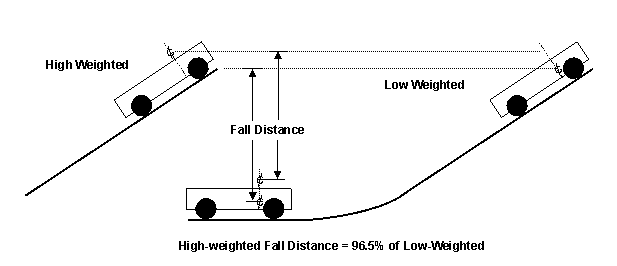
Improper weight placement turns your toy car into a physics lesson in inefficiency. Optimal distribution depends on your car’s purpose.
Track Racers vs. Floor Cruisers: Different Needs
- Track racers: 60% weight on rear wheels for maximum traction during acceleration
- Floor cruisers: 50/50 weight distribution for consistent speed on varied surfaces
Quick Fix: Tape small coins (pennies work perfectly) to the chassis underside. For pull-back cars, concentrate weight toward the rear; for gravity racers, shift weight slightly forward.
The Critical Center of Gravity Adjustment
Most toy cars have top-heavy designs that cause wheelies or instability at speed. Lower the center of gravity by:
- Replacing plastic bodies with lightweight balsa wood alternatives
- Mounting batteries at the lowest possible point
- Avoiding tall decorative elements that catch air
This simple adjustment prevents energy-wasting bouncing and maintains consistent wheel contact with the surface.
Aerodynamic Tweaks You Can Do With Household Items

Toy cars suffer significant drag from design flaws you can correct with basic materials. Focus on these high-impact areas.
Front-End Modifications That Cut Air Resistance
The blunt front ends on most toy cars create turbulence. Improve airflow by:
- Attaching a thin foam wedge under the front bumper
- Smoothing sharp edges with fine sandpaper
- Creating a subtle “chin spoiler” from cardboard
These modifications work best on vehicles intended for straight-line speed over 3 feet—shorter distances won’t benefit from aerodynamics.
Why Smooth Bodies Outperform Detailed Designs
Intricate details on toy car bodies create drag points. For maximum speed:
– Fill unnecessary grilles with tape
– Remove mirrors and antennas
– Sand down raised emblems
A smooth-bodied Hot Wheels car can gain up to 15% speed over detailed versions on tracks longer than 6 feet—every protrusion matters at toy scale.
Track Preparation Secrets Most Hobbyists Miss
Your surface matters as much as the car itself. Professional racers spend more time on track prep than car modifications.
The 45-Degree Cleaning Technique
Most people clean tracks horizontally, missing debris in the guide槽. Instead:
1. Hold cleaning cloth at 45-degree angle
2. Wipe from multiple directions
3. Finish with dry microfiber in track direction
This removes 95% of performance-killing debris compared to standard wiping.
Temperature Control for Consistent Runs
Plastic tracks expand and contract with temperature, changing friction characteristics. For competition-level consistency:
– Store tracks at consistent room temperature
– Run 3 “warm-up” cars before timing official runs
– Avoid direct sunlight on race surfaces
A 10°F temperature change can alter race times by up to 8%—critical for close competitions.
When to Upgrade Components (And What Actually Matters)
Not all upgrades deliver meaningful speed gains. Invest in these components first for maximum return.
Motor Replacement Guidelines
Only replace stock motors when:
– Original has visible damage
– You’re using proper voltage regulators
– New motor matches physical dimensions exactly
Smart Upgrade Path:
1. Clean existing motor first (90% of “dead” motors just need cleaning)
2. Try higher-quality batteries
3. Consider motor swap only as last resort
Most toy-grade motors cost less than $5 and require only basic soldering skills to install.
The Wheel Upgrade Myth
Larger wheels seem logical for speed, but they often reduce acceleration due to increased rotational mass. Instead:
– Match wheel diameter to original specs
– Choose slightly softer rubber for better traction
– Ensure perfect roundness (reject any with flat spots)
Precision matters more than size—imperfect wheels waste energy through vibration.
Maintenance Schedule for Long-Term Speed Preservation
Speed modifications fail without proper maintenance. Implement this simple routine:
- After every use: Wipe wheels and track contact points
- Weekly: Check gear alignment and lubrication
- Monthly: Clean motor contacts and inspect for wear
A well-maintained toy car maintains 95% of its peak performance for years, while neglected models lose 40% speed in just three months. Document your car’s baseline performance with a simple timer app—this helps identify when maintenance is needed before problems become severe.
Final Tip: Always test modifications individually. Changing multiple elements at once makes it impossible to identify which tweak actually improved performance. Keep a modification log noting each change and its measured effect—this systematic approach separates casual players from serious hobbyists. Whether you’re fixing a child’s favorite toy or prepping for competition, these proven techniques will have your toy car flying down the track in no time.