
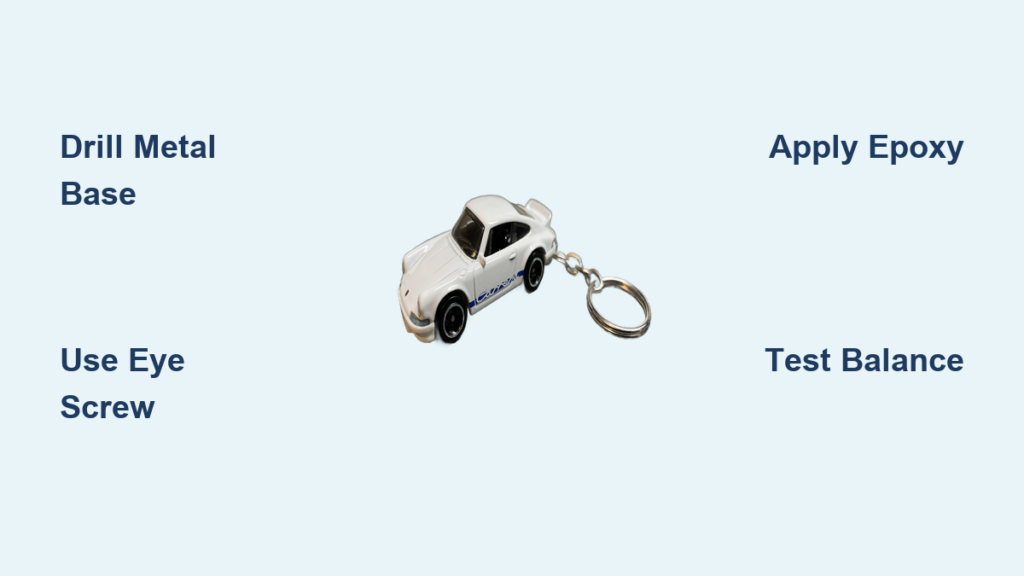
Your favorite Hot Wheels car deserves more than gathering dust in a display case. Transforming these miniature speed machines into functional keychains solves the dilemma of showcasing your collection while keeping them accessible. This guide reveals three battle-tested how to make Hot Wheels keychain methods that preserve your die-cast treasure’s integrity. Whether you’re reviving childhood nostalgia or creating custom gifts, you’ll craft a durable accessory in under 15 minutes using basic tools. Discover how metal-base models withstand modification best, avoid common pitfalls that crack paint, and learn pro techniques for seamless integration with your everyday keys.
The secret lies in strategic attachment points and specialized materials that respect Hot Wheels’ delicate construction. Forget flimsy store-bought versions that snap after a week—your handmade keychain will survive daily pocket carry while turning heads. You’ll master precision drilling on metal bases, implement no-drill adhesive solutions for plastic-heavy models, and troubleshoot balance issues before they ruin your creation. This isn’t just about attaching a ring; it’s about engineering a miniature masterpiece that honors your automotive passion.
Select Your Ideal Hot Wheels Model for Keychain Conversion
Metal-Base Cars That Won’t Crack During Drilling
Prioritize vehicles with full metal chassis—these withstand drilling forces without shattering like plastic-heavy models. Classic Mustangs, Chevrolet Camaros, and modern supercars like the Bugatti Chiron typically feature robust metal bases. Avoid “Car Culture” series with extensive plastic undercarriages; their thin metal layers crack under drill pressure. Inspect for internal weights: premium models often embed metal chunks near the rear axle that interfere with drilling paths. Run your fingernail along the base seam—if it feels thick and solid, not brittle or hollow, you’ve found the perfect candidate.
Critical Pre-Modification Inspection Checklist
Before touching tools, perform this 30-second assessment:
– Spin each wheel to identify loose axles that could dislodge during drilling
– Shake near your ear to detect rattling internal weights (common in “Elite” series)
– Examine paint thickness at potential drill sites—thinner areas chip more easily
– Test hanging balance by resting a toothpick through the wheel wells to find natural suspension points
Models with integrated spoilers or low-hanging bumpers create pocket-snag hazards. Choose clean-silhouette cars like the ’67 Ford Mustang Fastback for smooth daily carry. If your sentimental favorite has fragile details, skip drilling entirely and use the adhesive method covered later.
Three Field-Tested Hot Wheels Keychain Methods
Direct Drilling Method: 7-Minute Metal Attachment

Perfect Drilling Location to Prevent Tilting
Position your drill spot 3mm forward of the car’s center point on the metal base—this counteracts rear-weighted hanging. Use a thumbtack to create a starter dimple where the chassis meets the rear bumper; this anchors the drill bit and prevents paint scarring. Wrap the entire car in microfiber cloth before clamping in a soft-jaw vise (or secure between wooden blocks) to eliminate pressure marks.
Drill Settings That Won’t Melt Plastic Components
Set your drill to 600 RPM—higher speeds generate heat that warps plastic wheel hubs. Start with a 1/16″ bit at 45-degree angle, then straighten to 90 degrees once the bit bites. Drill in 5-second bursts with 10-second cooling pauses; you’ll feel resistance drop when penetrating metal. Stop immediately if plastic smoke appears—that’s your cue to apply a drop of cutting oil. For stubborn models, dip the bit in water between passes to dissipate heat.
Thread Locking Technique for Permanent Attachment
Screw a 6mm eye bolt into the hole with one drop of epoxy on the threads—this creates a mechanical lock epoxy alone can’t achieve. Hand-tighten until the eye sits flush, then wipe excess epoxy with a toothpick dipped in acetone. Cure vertically for 24 hours (not flat!) to prevent epoxy migration into wheel wells. Before adding keys, perform the “tug test”: suspend by the ring and shake vigorously—zero wobble means it’s ready for daily use.
Eye Screw Method: Secure Attachment Without Full Penetration
Installing Screws That Won’t Protrude into Wheel Wells
Skip pre-drilling for metal-base cars—use the screw’s tip as its own pilot. Position the eye screw vertically at the rear chassis seam where metal is thickest. Apply firm downward pressure while turning clockwise with needle-nose pliers; you’ll feel it “catch” after 2 full rotations. Stop when only 1mm of shaft remains visible—any longer and it’ll snag pocket fabric. For plastic-heavy models, drill a 2mm pilot hole first to prevent base splitting.
Key Ring Integration That Prevents Snagging
Thread your split ring through the eye loop while compressing the ring’s gap with pliers. Release the pliers slowly—if the gap snaps shut completely with no visible opening, it’s secure. Test by dragging the ring across denim fabric; if it catches, reposition the ring to orient the gap downward. This subtle adjustment prevents the ring from catching on seams during pocket entry/exit.
Adhesive Mounting: Preserve Sentimental Cars With Zero Drilling
Surface Prep That Makes Epoxy Bond Like Metal
Clean the attachment zone (usually center chassis) with 90% isopropyl alcohol on a cotton swab—rub until no residue appears. Roughen the surface with 400-grit sandpaper in circular motions for 10 seconds to create “tooth” for epoxy adhesion. Mix equal parts A/B epoxy on a popsicle stick, then apply a grain-of-rice-sized dot to a flat-base eye bolt. Press firmly into position, ensuring full contact with no air pockets.
Clamping Technique for Maximum Strength Without Damage
Place two business cards on either side of the car as protective spacers. Sandwich between wooden blocks and apply just enough clamp pressure to squeeze out a thin epoxy bead at the edges—excessive force smears epoxy onto visible surfaces. Cure upside-down for 48 hours to let gravity strengthen the bond. After curing, peel away dried epoxy strings with tweezers rather than cutting to avoid scratching paint.
Critical Troubleshooting for Flawless Results

Stop Cracks Before They Start: Drill Bit Red Flags
Replace bits immediately if you notice these danger signs:
– Metal shavings turn from silver curls to gray powder (bit is dull)
– Drill emits burning plastic smell (overheating)
– Car vibrates excessively in your grip (bit wandering)
Dull bits cause 80% of cracking failures. Keep new 1/16″ bits chilled in the freezer—they stay sharper longer during metal drilling. For cars with hidden plastic layers beneath paint, drill at 400 RPM with constant cutting oil drip.
Balance Fixes When Your Car Tilts Sideways
If your keychain hangs lopsided, don’t re-drill—add micro counterweights:
1. Cut 2mm section from copper wire
2. Slide between rear tires against axle
3. Bend ends upward to “hook” axle securely
4. Test hang position and adjust wire length
For severe tilting, create a two-point suspension: drill a second shallow hole at the front chassis, attach a secondary ring, and connect both rings to your main key ring with split rings. This distributes weight evenly like a miniature trailer hitch.
Safety Protocol for Injury-Free Modifications
Essential Gear That Prevents 90% of Workshop Accidents
Always wear:
– ANSI Z87.1 safety glasses (metal shards can permanently blind)
– Cut-resistant gloves when handling drilled edges
– N95 mask when sanding paint chips
Never hold the car in your palm during drilling—even a 1/16″ slip can drive the bit through your hand. Secure it in a vise padded with blue painter’s tape. Keep a first-aid kit with hemostatic gauze nearby; these tiny wounds bleed surprisingly heavily.
Final Quality Verification Before Daily Use
Stress Test Sequence That Exposes Weak Bonds
Perform these checks before trusting your keys to the keychain:
1. Weight test: Hang 10x your key weight (e.g., 500g for average keys) for 5 minutes
2. Impact test: Drop from waist height onto carpet 3 times
3. Rotation test: Spin keys rapidly for 30 seconds—no wheel wobble allowed
If the attachment survives all tests but shows paint stress cracks, apply a clear nail polish sealant to prevent moisture corrosion. For immediate use, wrap the base with thin heat-shrink tubing—it adds grip while hiding minor flaws.
Cost-Saving Production Tips for Multiple Keychains

Bulk Material Hacks That Slash Costs by 70%
Source these budget-friendly alternatives:
– Cars: Buy “mystery boxes” from eBay sellers ($0.75/car vs. $5 retail)
– Hardware: Order 100-pack mini eye screws from Amazon ($8.99)
– Adhesives: Use J-B Weld Mini (lasts 50+ keychains vs. $5 single-tube epoxy)
For consistent drilling, create a template from cardboard: cut slots matching your drill bit width, then slide cars into slots for perfect positioning every time. This cuts production time to 9 minutes per keychain.
Your Hot Wheels keychain now balances engineering precision with personal expression. These techniques work for any 1:64 die-cast car—start with an inexpensive model to perfect your skills before modifying rare editions. Within a week of daily use, you’ll notice the satisfying weight of your keys and the conversation-starting charm of a custom accessory. For advanced creators, explore adding micro-LEDs powered by coin batteries—just ensure all electronics stay clear of the attachment point. Ready to scale up? Master these methods first, then experiment with weathered finishes or dual-car tandem keychains that turn heads at every keyring jingle.