
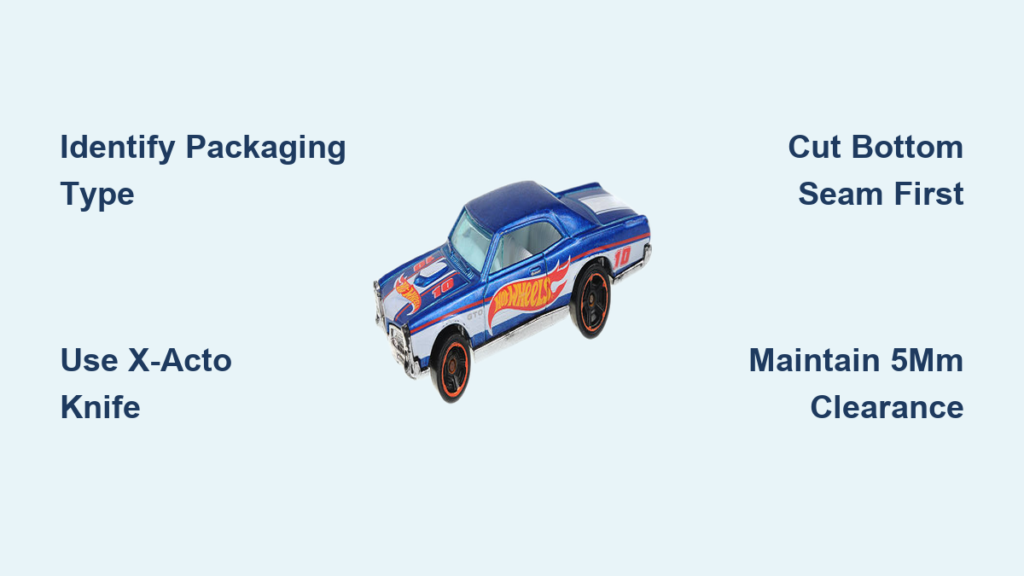
You’ve just bought a new Hot Wheels car, but now you’re staring at that stubborn blister pack, unsure how to safely extract the vehicle without ruining either the car or its valuable packaging. Whether you’re a serious collector preserving mint-condition items or a parent trying to satisfy an eager child, knowing the proper technique for opening Hot Wheels packages makes all the difference between a clean extraction and a costly mistake. Many enthusiasts accidentally scratch paint jobs, tear backing cards, or leave jagged plastic edges simply because they used the wrong method for their specific package type.
This comprehensive guide reveals professional techniques for opening every Hot Wheels packaging style while maintaining both the car’s condition and the package’s integrity. You’ll discover which tools actually work best, how to identify weak points in different packaging designs, and collector-approved methods that preserve resale value. Most importantly, you’ll learn why certain approaches fail and how to avoid common pitfalls that turn a simple unboxing into a frustrating experience.
Identify Your Hot Wheels Packaging Type First
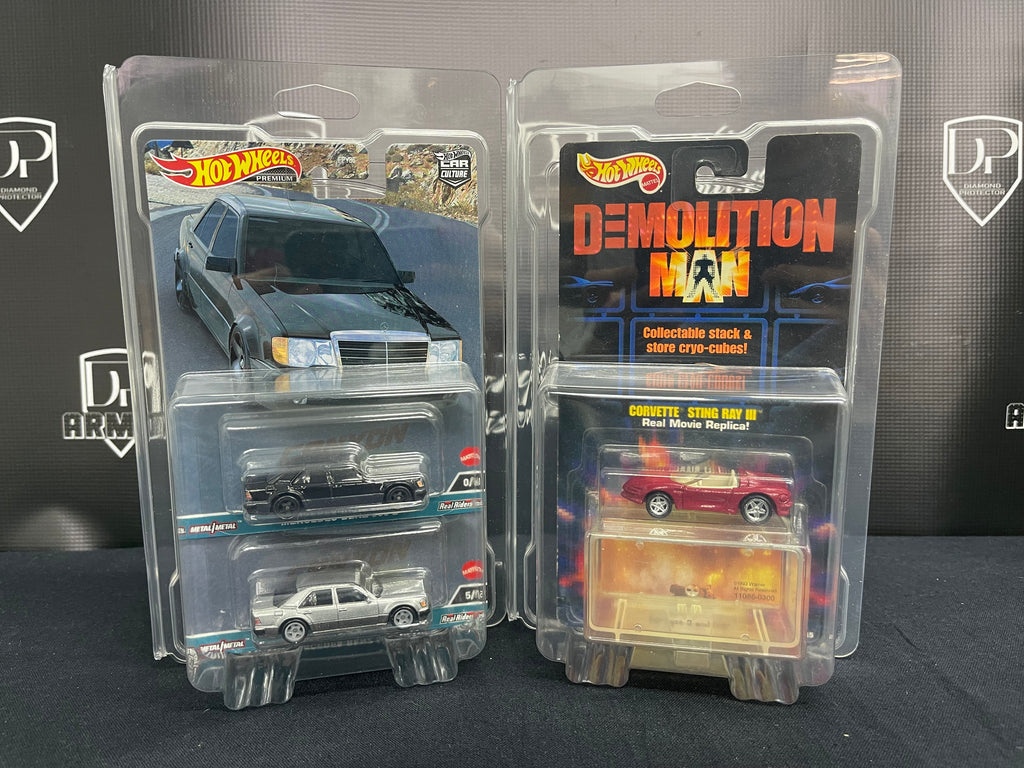
Before reaching for any tools, determine exactly what kind of packaging you’re dealing with—this prevents unnecessary damage. Standard blister packs have thinner plastic that’s easier to cut, while premium editions like Car Culture series use thicker, more rigid plastic that requires special handling. Multipacks present their own challenges with multiple compartments connected by thin plastic bridges.
Critical packaging identifiers:
– Standard blister: Single car, thin plastic bubble, card backing
– Premium edition: Thicker plastic, specialty backing, often numbered
– Multipack: Contains 5-10 cars with connecting tabs between compartments
– Treasure Hunt: Features special markings and higher collector value
The wrong technique for your specific packaging type can reduce value by up to 40% for collectible models, so identification comes before action.
Cutting Tools That Actually Work for Hot Wheels
Precision Blades Versus Household Scissors
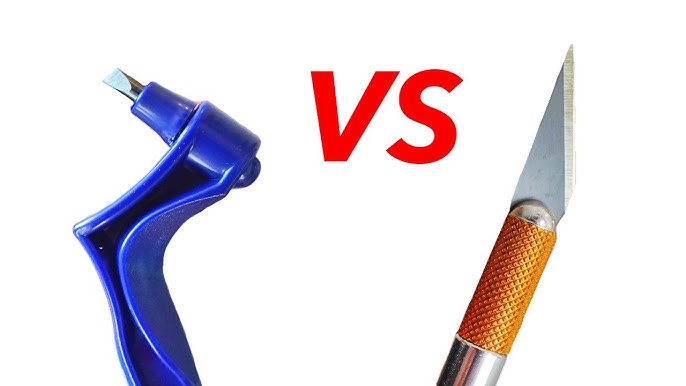
Dedicate a fresh X-Acto knife with #11 blades for Hot Wheels extraction—these provide surgical precision for clean cuts along seams. Standard scissors create jagged edges and often crush the delicate plastic bubble, while kitchen knives are too thick and uncontrollable for this delicate work. Professional collectors replace blades after every 2-3 packages because even slight dullness causes tearing rather than clean cutting.
Tool performance comparison:
– X-Acto knife: Best for collectors (precision, clean cuts)
– Craft scissors: Good for beginners (more control)
– Box cutters: Worst option (slips easily, damages cards)
Never use teeth or improvised tools—these inevitably damage both packaging and vehicles.
Essential Safety Gear for Safe Package Opening
Working with sharp blades around children’s toys requires serious safety precautions. Always wear cut-resistant gloves rated ANSI Level A2 or higher—standard gardening gloves won’t stop a sharp X-Acto blade. Set up your workspace on a self-healing cutting mat with proper lighting, and keep safety glasses nearby to protect against flying plastic shards.
Non-negotiable safety rules:
– Never cut toward your body
– Always work with the car facing away from cutting direction
– Keep fingers clear of the cutting path
– Store blades securely when not in use
Cutting packages over carpet creates invisible plastic hazards—always work on hard surfaces you can sweep thoroughly afterward.
Master the Blister Pack Cutting Technique
Locate the Hidden Seam for Clean Extraction
The secret to clean Hot Wheels extraction lies in finding the actual seam where plastic meets card—this differs from the printed border. Hold the package at a 45-degree angle under bright light to reveal the true seam, which typically sits 2-3mm inside the decorative border. Most packages have their weakest point at the bottom right corner where factory machines complete the seal.
Seam identification tips:
– Look for a slight ridge along the edge
– Check for tiny factory pin holes marking the seam line
– Feel for texture changes between printed border and actual seam
Starting your cut in the wrong location guarantees card damage and potential car scratches during removal.
Perfect Cutting Sequence for Intact Packaging
Position the package face-down on your cutting mat with the car safely away from your cutting path. Insert your fresh blade at a 15-degree angle under the plastic at the bottom right corner weakness point. Maintain consistent, light pressure as you follow this exact sequence:
- Cut along the bottom edge for 3-4 inches
- Pivot smoothly to cut up the right side
- Continue across the top edge
- Complete by cutting down the left side
Critical pressure guide:
– Too light: Tears the card backing
– Too heavy: Cuts through the card completely
– Just right: Removes plastic while preserving printed surface
Stop cutting 5mm before reaching the car’s outline to prevent accidental scratches during removal.
Special Handling for Premium and Treasure Hunt Models
Heat-Assisted Opening for Thick Premium Packaging
Premium Hot Wheels series require a different approach due to their thicker plastic construction. Apply gentle heat with a hair dryer on medium setting for 20-30 seconds along the seam—this softens the plastic without warping the backing card. Work in 2-inch sections, testing heat level on a less valuable package first to avoid melting.
Heat application rules:
– Maintain 6 inches between dryer and package
– Move dryer constantly in circular motion
– Never exceed 30 seconds per section
– Allow 10 seconds cooling between applications
Overheating creates permanent warping that destroys collector value, so err on the side of caution.
Treasure Hunt Preservation Cutting Method
For valuable Treasure Hunt models, use the three-sided cut technique that preserves maximum package integrity. Cut only along the bottom edge and extend ½ inch up each side, leaving the top completely intact. This creates a hinged opening where the car lifts out cleanly while maintaining the blister’s original shape when closed.
Value-preserving cut pattern:
– Cut only the bottom seam (no sides)
– Leave top 90% of plastic attached
– Create small release points at wheel positions
– Never cut near the car’s outline
This method maintains up to 95% of the package’s display value compared to standard full-cuts.
Multipack and Tool-Free Opening Strategies

Multipack Compartment Isolation Technique
Multipack Hot Wheels require a different approach than single blister packs. Instead of cutting the main perimeter, locate the thin plastic tabs connecting individual compartments—these serve as natural separation points. Snip these tabs first with precision scissors, then isolate each car’s section before extraction.
Multipack opening sequence:
1. Identify compartment separation tabs
2. Cut only the connecting tabs (not main seams)
3. Lift each compartment separately
4. Apply single-pack techniques to isolated sections
This preserves individual display options while allowing access to specific vehicles.
Emergency No-Tool Opening Methods
When blades aren’t available, try the controlled pressure method on standard blister packs. Press firmly on the plastic bubble directly above the rear wheels with your thumb—this creates a controlled tear at the seam’s weakest point. Once started, carefully peel the plastic back using your fingernail as a lever.
No-tool limitations:
– Only works on thinner, standard packaging
– Higher risk of jagged edges
– Not suitable for premium or valuable models
– Requires practice to avoid car damage
This method should be your last resort when proper tools aren’t available.
Critical Mistakes That Ruin Hot Wheels Packaging
The 5mm Clearance Rule Every Collector Must Know
Cutting too close to the car outline creates sharp plastic edges that inevitably scratch your vehicle during removal. Maintain at least 5mm (about 1/5 inch) between your cut line and the car’s silhouette—this safety margin prevents accidental damage while still allowing clean extraction. Measure this distance using the thickness of your blade as a guide.
Consequences of cutting too close:
– Permanent paint scratches during removal
– Reduced collector value
– Jagged plastic edges that catch on clothing
– Higher risk of dropping the car
This single measurement preserves both the car’s finish and your peace of mind.
Orientation Errors That Cause Catastrophic Damage
Opening packages face-up invites disaster—one slip sends your blade across the car’s hood, creating irreparable scratches. Always work with the package positioned so the car faces away from your cutting direction. For standard orientation, place the package face-down with the car’s front pointing toward you—this ensures any blade slip moves away from the vehicle.
Proper workspace setup:
– Package face-down on cutting surface
– Car positioned away from cutting hand
– Bright lighting from multiple angles
– Non-slip surface underneath
This simple orientation change prevents 90% of accidental car damage during opening.
Storage Solutions for Preserved Packaging
Immediate Post-Opening Preservation Steps
After extracting your Hot Wheels car, immediately inspect for factory defects while you can still potentially return the item. Store the opened blister flat in an archival-quality comic book bag to maintain shape and prevent dust accumulation. Keep cars separate from packaging in display cases to avoid paint transfer from plastic residues.
Essential post-opening actions:
– Wipe car with microfiber cloth
– Check wheels for proper rotation
– Store packaging flat (never folded)
– Label packaging with car details
These steps ensure both car and packaging maintain their condition long-term.
Quick Reference Opening Guide
Standard blister packs: Fresh X-Acto blade + bottom seam cut = fastest clean extraction
Premium editions: Hair dryer heat + precision cutting = damage-free opening
Treasure Hunts: Three-sided cut pattern = maximum value preservation
Multipacks: Tab isolation method = compartment-specific access
Remember that sharp tools and patience always outperform brute force when opening Hot Wheels packages. Start with common models to practice your technique before attempting valuable collectibles. With the right approach, you can consistently extract Hot Wheels cars cleanly while preserving packaging integrity for display or future resale value.