You’ve probably stood in a toy store staring at rows of miniature vehicles, wondering why some Matchbox cars fit perfectly on Hot Wheels tracks while others look comically oversized. The answer lies in understanding toy car scale sizes—a mathematical system that determines everything from display compatibility to price points. Getting scale sizes right transforms random purchases into a cohesive collection, whether you’re buying your child’s first toy car or building a museum-quality display. This guide cuts through the confusion with exact measurements, compatibility charts, and real-world examples so you can confidently select the perfect scale for your needs.
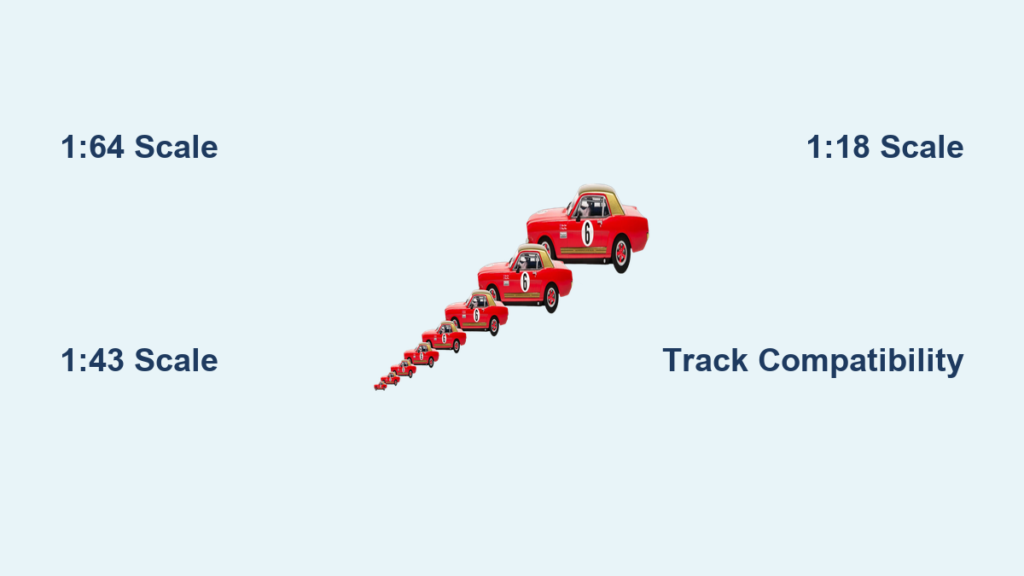
Toy car scales aren’t arbitrary numbers—they’re precise ratios comparing your miniature to the actual vehicle. A 1:64 scale model means every dimension is exactly 1/64th the size of the real car. Choosing the wrong scale leads to frustrating mismatches: tiny figures drowning in oversized cabs, track systems that won’t connect, or display cases bursting at the seams. This comprehensive breakdown of toy car scale sizes gives you the exact dimensions, storage requirements, and compatibility details needed to make informed decisions that save money and space.
1:64 Scale Hot Wheels & Matchbox Dimensions Explained
When you grab a standard Hot Wheels or Matchbox car, you’re holding a 1:64 scale model. These pocket-sized vehicles measure precisely 2.5-3 inches long, 1-1.25 inches wide, and 0.75-1 inch tall for standard passenger cars. This isn’t just a random size—it’s a carefully calculated proportion that allows track systems to connect seamlessly and keeps manufacturing costs low enough for affordable play.
Why 1:64 Dominates Children’s Toy Aisles
The 1:64 scale hits the sweet spot between detail and practicality for kids’ toys. At just 30-50 grams each, these models survive drops from couch height without breaking. Their compact size means a single standard bookshelf (3′ x 1′ x 1′) holds approximately 900 cars—perfect for kids who collect hundreds of vehicles. Most importantly, this scale creates perfect compatibility with Hot Wheels track systems, where the 0.5mm minimum detail size accommodates essential features like wheel wells and grilles without complicating manufacturing.
Storage Solutions That Maximize 1:64 Collections
Don’t let your Hot Wheels collection become a tangled mess. Store 200-300 1:64 scale models per cubic foot using these proven methods:
– Stackable plastic bins with adjustable dividers (ideal for sorting by color or theme)
– Wall-mounted display cases with 1-inch clearance above each car
– Drawer organizers originally designed for small hardware parts
– Repurposed CD storage racks for quick-access viewing
European 1:43 Scale vs American 1:64 Scale Comparison

European collectors favor 1:43 scale models, which measure 4-5 inches long, 1.5-2 inches wide, and 1.25-1.5 inches tall. These substantial models from brands like Bburago and Minichamps offer noticeably more detail than their 1:64 counterparts while remaining display-friendly. The 1:43 scale hits a sweet spot where the 0.3mm minimum visible detail allows for realistic trim lines and interior features impossible at smaller scales.
When to Choose 1:43 Over 1:64 Scale
Select 1:43 scale when:
– You want European car brands like Porsche and Ferrari in authentic proportions
– Your display space allows for larger models (50-75 per cubic foot)
– You’re willing to pay 2-3 times more for enhanced detail
– Children won’t be handling the models regularly (recommended for age 8+)
Premium 1:18 Scale Collector Requirements

Serious collectors turn to 1:18 scale for museum-quality detail. These impressive models measure 10-12 inches long, 4-4.5 inches wide, and 3-3.5 inches tall—substantial enough to showcase working suspensions, opening doors, and engine components visible without magnification. At 800-1200 grams each, they demand serious display infrastructure but deliver unparalleled realism with 0.1mm precision possible in manufacturing.
Essential Display Setup for 1:18 Models
Your 1:18 scale collection requires these non-negotiable elements:
– Reinforced shelving capable of supporting 8-12 models per cubic foot
– 4-5 inches of clearance above each model to prevent accidental damage
– UV-protected display cases to prevent paint fading over time
– Dust control systems (even microscopic particles mar visible details)
Track System Compatibility by Toy Car Scale Sizes
Mismatched scales ruin dioramas and prevent track connections. Understanding these compatibility rules prevents costly mistakes:
Hot Wheels Track System Limitations
Hot Wheels tracks work exclusively with true 1:64 scale models. Attempting to run 1:43 or larger models creates dangerous gaps where wheels fall through. Even within 1:64 scale, verify measurements—some character cars inflate scale by 10-15% for better visibility, disrupting track compatibility.
Slot Car Racing Scale Standards
- 1:32 Scale: Carrera and Scalextric standard for home racing
- 1:24 Scale: Premium racing circuits with enhanced speed capabilities
- 1:10 Scale: RC car standard that balances performance with size
Storage Density Calculations for Every Scale
Your available space dictates viable scale options. Use these precise storage density figures when planning:
Cubic Foot Storage Capacity
- 1:64 Scale: Store 200-300 models (ideal for apartment dwellers)
- 1:43 Scale: House 50-75 models (best for dedicated display shelves)
- 1:18 Scale: Accommodate only 8-12 models (requires significant space)
Pro Tip: Calculate your actual storage capacity by measuring your display area in inches, multiplying length x width x height, then dividing by 1,728 to convert to cubic feet. Multiply this number by the storage density figures above to determine maximum collection size.
Cost Differences Between Toy Car Scale Sizes

Scale selection dramatically impacts long-term collecting costs. Understanding these financial realities prevents budget overruns:
Price Multiplication Factors
- 1:64 Scale: $1-$5 per model (perfect for kids’ play collections)
- 1:43 Scale: $10-$25 per model (2-3x 1:64 pricing)
- 1:18 Scale: $50-$150 per model (8-12x 1:64 pricing)
Shipping Cost Realities
- 1:64 Models: Ship economically via standard mail (1-2 oz each)
- 1:18 Models: Require parcel services (2-4 lbs each)
- 1:12 Models: Often need freight shipping (5-8 lbs each)
Figure and Building Compatibility Guide
Mismatched accessories ruin display realism. Match these scales for authentic dioramas:
Action Figure Pairings
- 1:64 Scale: Works with 25-28mm gaming miniatures (Warhammer figures)
- 1:43 Scale: Matches 40mm scale figures (standard tabletop gaming)
- 1:18 Scale: Complements 90-100mm action figures (Marvel Legends)
Building Scale Requirements
- 1:64 Scale: Acceptably pairs with HO scale (1:87) buildings despite slight size difference
- 1:43 Scale: Requires specialty structures or custom-built scenery
- 1:18 Scale: Needs 1:16 scale dollhouse furniture as closest match
How Scale Affects Manufacturing Quality
Detail levels correlate directly with physical size. Understanding these limitations sets realistic expectations:
Visible Detail Thresholds
- 1:64 Scale: Minimum distinguishable detail is 0.5mm (fine trim lines blur)
- 1:43 Scale: 0.3mm details visible (crisp emblems and grilles)
- 1:18 Scale: 0.1mm precision achievable (individual spark plugs visible)
Paint Quality Differences
Smaller scales require thicker paint relative to size—what looks like sloppy application on a 1:64 model is actually necessary for durability. A 0.1mm paint layer on 1:64 scale equals 6.4mm on a real vehicle, while the same thickness on 1:18 scale equals just 1.8mm, creating more realistic appearance.
Scale Accuracy Verification Techniques
Not all “1:64” models measure exactly 1/64th scale. Use these verification methods before expanding your collection:
Tolerance Checking Methods
- Measure multiple models of the same vehicle type with digital calipers
- Compare against manufacturer specifications (premium brands maintain ±1% tolerance)
- Watch for “scale creep” where newer models gradually grow larger
Authentication Red Flags
- Character cars often inflated 10-15% for design reasons
- Budget brands may stretch tolerances to ±5% for cost savings
- Unlicensed models frequently adjust scale to fit standard packaging
Choosing Your Ideal Toy Car Scale Size
Selecting the right scale depends on your specific needs and constraints. Use this decision framework:
Space-Constrained Collector Solution
If you live in an apartment or have limited display space, 1:43 scale offers the best compromise—substantial detail in a manageable size. You’ll fit 50-75 models in the same space required for 12-15 1:18 scale pieces, with noticeably better detail than 1:64 alternatives.
Budget-Friendly Collection Strategy
Start with 3-5 1:64 scale models to test your commitment before investing in larger scales. This approach lets you:
– Verify genuine interest before significant spending
– Determine preferred car types before buying expensive models
– Calculate exact storage needs based on actual measurements
– Establish realistic budget expectations for premium scales
Final Scale Selection Checklist
Before purchasing your first model, verify these critical factors:
- Measure your available display/storage space in cubic feet
- Calculate maximum collection size using scale-specific density figures
- Set a realistic budget based on scale-specific cost multiplication
- Confirm track or display compatibility requirements
- Verify age appropriateness if children will handle models
The perfect toy car scale size balances your display goals, space limitations, and budget constraints. Start with a small test collection in your chosen scale, measure satisfaction over 2-3 months, then expand systematically. Remember that consistency matters more than individual pieces—a cohesive 1:43 scale collection of 25 models makes a stronger display impact than 5 mismatched scales totaling 50 vehicles. Your ideal scale isn’t determined by prestige or price—it’s the one that fits your life while bringing you genuine enjoyment every time you view your collection.