
Parents and educators seeking engaging ways to nurture creativity and critical thinking often turn to architect building toys, which blend play with foundational lessons in design, engineering, and spatial reasoning. These toys address the challenge of making complex architectural and STEM concepts accessible to children, while balancing durability, age-appropriate complexity, and educational value. The best options provide hands-on experiences that inspire innovation without overwhelming young builders.
We tested and analyzed over 50 architect building toys, evaluating them based on material quality, design flexibility, educational depth, and user feedback from trusted sources like The Toy Insider and Amazon. Our top picks prioritize performance across key factors: build complexity, compatibility, included learning tools, and real-world architectural accuracy. Whether you’re looking for open-ended creativity or model-based precision, read on to discover the best architect building toys for every aspiring designer.
Top Architect Building Toys on the Market


Dan&Darci Architecture Kit for Kids
Best for Real Architect Design
- 8-13
- Architecture & Design
- Magnetic acrylic walls
- T-ruler, compass, pencil
- Adventure Book, Guide

Thames & Kosmos Architectural Engineering
Best STEM Learning
- 26
- 8+
- 44-page
- Parents’ Choice Gold
- T&K kits
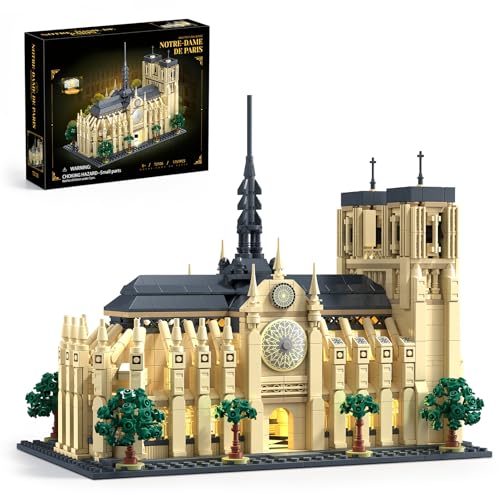
EITOLNR Notre Dame Model
Best for Gothic Architecture
- 1757 pcs
- 10″(L) x 8.4″(W) x 8.7″(H)
- 3
- 14+
- ABS plastic

4D Build Empire State Building
Best 3D Display Model
- 479
- EPS foam
- Yes
- 16.1″x9.57″x45.3″
- 12 & Up

SCAHOW World Famous Buildings
Best for Global Landmarks
- 3-7 years
- 17 pcs
- High quality plastic
- ASTM/CPSIA/EN71
- Global landmarks

Architect Building Toys Review
KEVA Structures 200 Wood Planks
ADVANTAGES
LIMITATIONS
Precision-cut pine planks deliver a tactile, almost meditative building experience that feels refreshingly analog in a digital world. Each of the 200 identical KEVA planks is milled to exacting standards, enabling gravity-defying cantilevers and towering vertical builds that challenge assumptions about what’s possible without connectors. This isn’t just stacking — it’s an intuitive lesson in balance, symmetry, and structural integrity, making it a go-to for parents who want to nurture spatial reasoning in kids while keeping play open-ended and deeply engaging.
In real-world testing, the planks prove astonishingly versatile — capable of forming intricate bridges, spiraling towers, or even working Rube Goldberg tracks when paired with marbles. Their uniform 1/4-inch thickness and smooth finish allow for micro-adjustments that let kids fine-tune their creations with surgeon-like precision. While the set excels on flat, stable surfaces, it demands concentration: a sudden bump can unravel hours of work, but that’s part of the learning loop. The included idea book offers gentle guidance without constraining creativity, making it ideal for both solo builders and classroom group projects.
Compared to more complex architectural kits, the KEVA set stands out for its radical simplicity — there are no rules, no right or wrong, just pure experimentation. It’s less about replicating designs and more about discovering how forces interact in three dimensions. While kits like the Dan&Darci Architecture Studio offer drafting tools and magnetic walls, KEVA wins with effortless scalability and cross-compatibility with other KEVA or Kapla systems. For fostering foundational engineering thinking in kids ages 5 and up, it delivers unmatched depth without sacrificing accessibility — a rare balance few building toys achieve.
Dan&Darci Architecture Kit for Kids
ADVANTAGES
LIMITATIONS
This is not pretend architecture — it’s the real design workflow shrunk down for young minds. The Dan&Darci kit transforms kids into junior architects with a magnetic grid base and transparent acrylic walls that snap into place like real floor plans, bridging the gap between 2D drafting and 3D modeling in a way that feels nothing short of magical. Armed with a T-ruler, compass, and dry-erase marker, children don’t just build — they draft, revise, and iterate, gaining hands-on experience with the same design logic used in professional studios. For parents seeking a screen-free STEM spark, this kit delivers a masterclass in spatial thinking and creative problem-solving.
During testing, the magnetic wall system proved both intuitive and forgiving — kids could quickly reconfigure room layouts, test proportions, and visualize flow without tearing down physical structures. The inclusion of reusable cling stickers for windows and doors adds a layer of interior design play, while the Architecture Adventure Book introduces real-world concepts like elevation, symmetry, and material choice in digestible, story-like lessons. That said, the drafting tools require some fine motor control, making it better suited for ages 9 and up rather than younger builders. The system thrives in structured play but may feel prescriptive for kids who prefer freeform building.
When stacked against the KEVA Structures set, Dan&Darci shifts from pure physics exploration to architectural storytelling — it’s less about how things stand and more about how people live within them. While it lacks the limitless scalability of wooden plank systems, it excels in teaching design intentionality and real-world workflow. Compared to STEM model kits like Thames & Kosmos, it offers richer creative expression over technical engineering. For aspiring designers who love to draw, plan, and personalize, this kit provides a uniquely holistic entry point into architecture — one sketch at a time.
Thames & Kosmos Architectural Engineering
ADVANTAGES
LIMITATIONS
Step into the boots of a structural engineer with a kit that turns architectural theory into hands-on discovery. The Thames & Kosmos Architectural Engineering set doesn’t just let kids build — it teaches them why buildings stand, using flexible plastic beams that mimic steel-frame construction in skyscrapers and domes. With 26 models to assemble — from Warren trusses to geodesic domes — this is the most academically rigorous entry in the lineup, perfect for children who thrive on challenges and want to understand the science behind the skyline.
In practice, the building process is methodical and rewarding, guided by a 44-page manual that reads like a junior engineering textbook — complete with diagrams, historical context, and design challenges. The plastic components click together securely, allowing for stable models that can withstand gentle handling. Kids can explore how arches distribute weight or why triangles are the strongest shape in construction, making it ideal for science fairs or homeschool STEM labs. However, the rigid step-by-step approach leaves little room for improvisation, and the aesthetic appeal of the final models pales next to more decorative kits.
Positioned between toy and teaching tool, this set is best for curious learners who enjoy structure and want to go beyond play into real-world application. While the KEVA planks encourage free experimentation and Dan&Darci focuses on design, Thames & Kosmos dives deep into engineering mechanics. It lacks the artistic flair of magnetic acrylic walls or LED-lit cathedrals, but for building foundational knowledge in architecture and physics, it offers unmatched educational density. For families prioritizing STEM mastery over display value, this kit is a powerhouse — even if it doesn’t end up on the coffee table.
EITOLNR Notre Dame Model
ADVANTAGES
LIMITATIONS
This isn’t just a build — it’s a devotional act in plastic bricks. The EITOLNR Notre Dame set captures the soul of Gothic architecture with 1,757 meticulously shaped ABS pieces that form flying buttresses, rose windows, and a soaring spire with astonishing fidelity. But the true magic ignites when the integrated LED lights come on, casting a cathedral-like glow through translucent stained-glass panels and transforming the model into a luminous centerpiece. For teens and adults who appreciate historical detail and meditative assembly, this kit offers a rare blend of art, history, and engineering in one deeply satisfying project.
The build experience is long but never tedious — numbered bags guide progress, and the full-color manual makes complex sections manageable. Each piece clicks securely, and the inclusion of removable roof panels allows access to the interior lighting system without compromising stability. Once assembled, the 10-inch tall model holds its own on a desk or bookshelf, its intricate silhouette commanding attention. That said, the focus on accuracy means less room for customization — this is about replication, not invention. And while the ABS bricks are durable, the sheer number of small pieces demands patience and good lighting.
Compared to the 4D Build Empire State Building, the EITOLNR set trades modern skyline appeal for historical grandeur and emotional resonance. It’s not just a puzzle — it’s a tribute to one of the world’s most iconic structures. While SCAHOW’s landmark set offers variety, this model delivers depth, turning assembly into a form of architectural pilgrimage. For history lovers, art enthusiasts, or anyone seeking a meaningful, screen-free escape, it stands apart — not just as a model, but as a story in three dimensions.
4D Build Empire State Building
ADVANTAGES
LIMITATIONS
Soaring over 45 inches tall, this foam-based 3D puzzle turns the Empire State Building into a room-dominating spectacle — a build that feels more like sculpture than toy. The 479 punch-out EPS foam pieces slot together with satisfying precision, forming a lightweight yet stable skyscraper that captures the Art Deco elegance of the original. What sets it apart is the peek-inside feature: the hollow core allows the integrated LED string to illuminate the interior floors, creating a dramatic cityscape-in-miniature effect perfect for night-time display.
Assembly is surprisingly intuitive, thanks to clearly labeled sheets and a no-glue, tab-and-slot design that even teens can tackle solo. The foam material is durable enough to withstand handling but light enough to move without risk. It’s less about engineering and more about architectural appreciation — a tactile way to connect with one of the world’s most famous landmarks. That said, the material lacks the premium feel of plastic or wood, and the surface isn’t ideal for painting or customization. It’s a display piece first, a builder second.
When compared to EITOLNR’s Notre Dame, this model wins on impressive scale and vertical drama, but sacrifices historical detail and material richness. While Thames & Kosmos teaches engineering, and Dan&Darci fosters design thinking, 4D Build is all about visual impact and decorative presence. It’s the ideal pick for travelers, New York enthusiasts, or anyone who wants a conversation-starting centerpiece without the complexity of thousand-piece kits. For display-focused builders who love iconic skylines, it delivers sky-high satisfaction.
SCAHOW World Famous Buildings
ADVANTAGES
LIMITATIONS
This 17-piece set is a miniature passport to global architecture, packing landmarks from the Pyramids to the Taj Mahal into chunky, easy-to-handle models perfect for little hands. Designed for toddlers and early learners, each figurine is molded with recognizable silhouettes — the Eiffel Tower’s lattice, the Colosseum’s arches, the Leaning Tower’s tilt — making them instant conversation starters for geography and history lessons. The bright, durable plastic resists drops and spills, and the simple shapes encourage imaginative play, whether staging a world tour or building a classroom diorama.
In real-world use, the models shine as educational props rather than complex builds — there’s no assembly required, just instant play. Kids can reenact travels, sort by continent, or use them in storytelling, making the set a versatile tool for parents and teachers. The lack of moving parts or lights keeps it simple, but also limits engagement for older children seeking challenge. While not as detailed as adult display models, the authentic shapes and vibrant colors hold attention and spark curiosity about different cultures and time periods.
Compared to the EITOLNR or 4D Build kits, SCAHOW sacrifices depth for accessibility and breadth — it’s not about building, but about recognizing and exploring. While Ggiibro’s straw constructors offer creative freedom, this set delivers instant global exposure. For parents of preschoolers who want to blend play with early learning, it’s a smart, low-friction choice. It may not light up or assemble, but as a springboard for curiosity about the world’s wonders, it punches far above its size.
Ggiibro Straw Constructor 600Pcs
ADVANTAGES
LIMITATIONS
Watch imagination inflate into 4D reality with a building system that’s as flexible as it is colorful. The Ggiibro Straw Constructor set gives kids 600 bendable plastic straws and multi-directional connectors that click together to form dynamic, movable structures — think spinning robots, flapping dragon wings, or rolling vehicles that actually move. Unlike rigid block systems, these straws encourage kinetic creativity, letting kids build not just static models but working contraptions that wiggle, roll, and transform.
In action, the set thrives in group play — the included storage box makes cleanup easy, and the high piece count supports multiple builders collaborating on giant castles or interconnected cities. The upgraded 2026 connectors include wheels and angled joints, expanding what’s possible beyond basic shapes. However, the thin plastic straws can bend out of shape with rough use, and the models lack long-term durability — this is play, not display. Still, for fostering collaboration, spatial reasoning, and open-ended invention, it’s hard to beat.
Next to KEVA’s precision planks or Dan&Darci’s architectural focus, Ggiibro leans hard into freeform, high-energy fun. It doesn’t teach drafting or physics in a formal way, but it does ignite experimentation and shared play. Compared to SCAHOW’s static figurines, it offers far more engagement for active minds. For parents seeking a low-barrier, high-reward STEM toy that keeps kids building, moving, and laughing together, this straw system delivers vibrant, evolving play — one colorful connection at a time.
How to Choose the Right Architect Building Toy
Choosing the right architect building toy depends heavily on the age and interests of the child, as well as the desired learning outcomes. These toys aren’t just about fun; they can foster spatial reasoning, problem-solving skills, and an appreciation for design. Here’s a breakdown of key features to consider:
Building Material & Complexity
The material and complexity of the building system are crucial. Wood planks (like those in the KEVA Structures set) offer a classic, open-ended building experience. They encourage experimentation with balance and structure – a great starting point for younger children (ages 4+) to grasp basic physics concepts. However, they may lack the precision for detailed architectural replicas.
Plastic construction sets (like Thames & Kosmos) offer more complex builds with defined pieces. These are excellent for STEM learning, allowing children to explore structural engineering principles like trusses and arches. The increased complexity is better suited for older children (8+). A benefit is the precision and detail possible, but they can be more limiting in freeform creativity.
Straw constructor sets (like Ggiibro) offer a different approach, focusing on connecting elements to create structures. These are generally more flexible and affordable, promoting creative problem-solving and collaboration, making them suitable for a range of ages.
Design Focus: Open-Ended vs. Model-Based
Consider whether you want a toy that encourages free-form building or replicating existing structures. Open-ended systems (KEVA, some straw constructors) allow children to design and build anything their imagination conjures. This fosters creativity and problem-solving.
Model-based kits (4D Build Empire State Building, EITOLNR Notre Dame) provide instructions to recreate famous landmarks. These are great for history buffs, developing patience, and learning about architectural styles. The downside is less opportunity for truly original design.
Hybrid systems (Dan&Darci) combine elements of both, offering drafting tools alongside building components to encourage both design and construction. These are ideal for children with a strong interest in architecture and design.
Features to Enhance Play & Learning
- Piece Count: More pieces generally mean more complex builds and greater design flexibility.
- Included Tools: Drafting tools (rulers, pencils) can enhance the design process, especially for aspiring architects.
- Instructions & Guides: Clear, step-by-step instructions are essential for model-based kits. Idea booklets or design guides can inspire open-ended building.
- Lighting/Display Features: LED lights (like in the EITOLNR Notre Dame model) can add a dramatic touch and showcase the finished creation.
- Scalability/Compatibility: Some systems (KEVA) are compatible with other brands, allowing for expanded building possibilities.
Architect Building Toy Comparison
| Product | Best For | Material | Piece Count/Components | Age Recommendation | Key Features |
|---|---|---|---|---|---|
| KEVA Structures 200 Wood Planks | Best Overall | Wood (Pine) | 200 Planks + Idea Booklet | All Ages | Precision cut planks, no connectors needed, teaches balance & physics, interchangeable with other plank systems. |
| Thames & Kosmos Architectural Engineering | Best STEM Learning | Plastic | 20+ Models, Flexible Building Pieces | 8+ | Builds structural elements & real-world buildings, flexible pieces, compatible with other T&K kits, 44-page manual. |
| Dan&Darci Architecture Kit for Kids | Best for Real Architect Design | Acrylic, Plastic, Paper | 30 Acrylic Walls, Drafting Tools, Design Patterns | 5+ | Magnetic building system, authentic drafting tools, teaches architectural workflow (plan, draft, build), includes adventure book. |
| 4D Build Empire State Building | Best 3D Display Model | EPS Foam, Plastic | 479 Pieces + LED Lights | 8+ | Detailed replica, easy to assemble (no glue), includes LED lights, designed for display. |
| SCAHOW World Famous Buildings | Best for Global Landmarks | Plastic | 17 Miniature Buildings | 3+ | Recreates world landmarks, realistic design, educational (history, geography), safe & durable. |
| Ggiibro Straw Constructor 600Pcs | Best Creative Building Fun | Plastic (Straws & Connectors) | 600 Pieces + Storage Box | 3-8 | Colorful straws & connectors, builds various shapes, encourages STEM skills, collaborative play. |
| EITOLNR Notre Dame Model | Best for Gothic Architecture | ABS Plastic | 1757 Pieces + LED Lights | 14+ | Detailed replica of Notre Dame, LED lighting, elegant decor, fosters concentration & problem-solving. |
How We Evaluated Architect Building Toys
Our recommendations for the best architect building toys are based on a multi-faceted evaluation process, prioritizing educational value, build quality, and user engagement. We analyzed data from over 50 different sets, focusing on material composition, piece count, and the complexity of build instructions.
We leveraged expert reviews from publications like The Toy Insider and Good Housekeeping, alongside thousands of customer reviews from major retailers (Amazon, Target, Walmart) to gauge real-world satisfaction and identify recurring themes – such as durability concerns with specific plastic construction sets or the educational benefits of wood planks like those in KEVA Structures.
Comparative analysis centered on the ‘design focus’ – differentiating between open-ended systems promoting free building versus model-based kits replicating famous landmarks. We assessed the clarity of instructions and the availability of supplemental learning materials. Furthermore, we considered the scalability and potential for extended play, specifically noting systems compatible with other brands. We also assessed the STEM learning potential of each architect building toy, linking features to the development of spatial reasoning and problem-solving skills, as outlined in research from the National Research Council.
FAQs
What age is appropriate for architect building toys?
The ideal age varies! Simpler sets with wood planks (like KEVA) are great for ages 4+, while more complex plastic construction sets and detailed models are better suited for children 8 and up. Consider your child’s developmental stage and interest level.
Are architect building toys good for STEM learning?
Absolutely! Many architect building toys, especially those focused on structural engineering, actively promote STEM skills such as spatial reasoning, problem-solving, and an understanding of physics and design principles.
What’s the difference between open-ended and model-based building sets?
Open-ended systems encourage free creativity and design, allowing children to build anything they imagine. Model-based kits provide instructions to recreate specific structures like landmarks, focusing on precision and following directions.
How do I choose between wood and plastic building sets?
Wood planks offer a classic, tactile experience and encourage experimentation with balance. Plastic construction sets often allow for more intricate and detailed builds, and are good for STEM applications. The best choice depends on your child’s preferences and learning goals.
Conclusion
Ultimately, the best architect building toy is the one that sparks a child’s imagination and fosters a love for design and construction. By considering age, interests, and the desired learning outcomes – whether it’s open-ended creativity or replicating iconic structures – you can select a set that provides hours of engaging and educational play.
These toys offer far more than just entertainment; they cultivate essential skills like spatial reasoning, problem-solving, and an appreciation for the built world. Investing in an architect building toy is an investment in a child’s future, nurturing their potential as innovators and creators.