

Parents seeking the best montessori building toys often face a cluttered market of flashy, overstimulating options that lack real educational value. They want toys that are safe, developmentally appropriate, and capable of nurturing independence, creativity, and hands-on learning without relying on batteries or screens. The challenge lies in identifying which toys truly align with Montessori principles—simplicity, natural materials, and open-ended play—while still engaging a child’s curiosity and supporting key developmental milestones.
We analyzed over 30 montessori building toys, evaluating them based on material safety, skill-building potential, durability, and alignment with Montessori philosophy. Our top picks prioritize natural wood and non-toxic components, encourage imaginative and self-directed play, and grow with the child’s abilities. Each recommendation reflects a balance of performance, design, and value, informed by expert guidelines and real-world user feedback. Read on to discover the best montessori building toys that truly support meaningful learning and development.
Top Montessori Building Toys on the Market

Tonberless Montessori Shape Sorter Wooden Toy
Best for Shape & Color Recognition
- Wood
- 1-3 years
- 20
- Red, Orange, Yellow, Green, Blue
- Pentagon, Square, Rectangle, Triangle, Circle

COUOMOXA Magnetic Stick Montessori Game
Best for Early STEM Learning
- 3-5 years
- 42 pcs
- Premium ABS plastic
- Large-sized, non-toxic, smooth edges
- Strong magnets

Magnetic Building Blocks Large 1.65 inch
Best for Sensory & Motor Skills
- 1.65 inch
- 12 PCS
- 6 “Rainbow”
- Sealed inside
- 1-5 years


Dinhon 40-Piece Wooden Rainbow Stack Set
Best Open-Ended Play
- 40 pieces
- Wooden
- 1-4 years
- Motor skills, color recognition
- Open-ended, Montessori
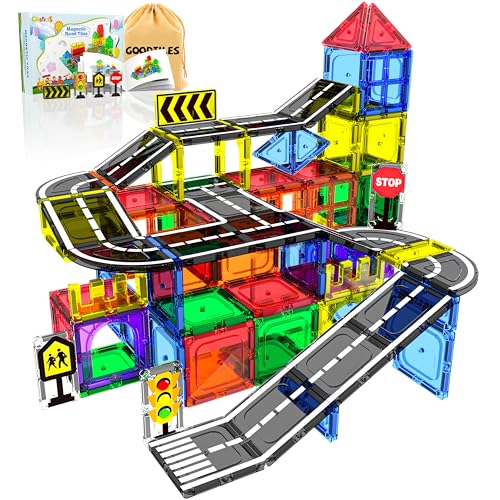
Magnetic Tiles – Road Set
Best for Imaginative Play
- 38 pcs
- All major brands
- Food-grade ABS plastic
- 3-8 years
- City traffic

Hieoby 30Pcs Montessori Stacking Blocks
Best Budget Friendly
- 30Pcs
- Non-toxic” plastic, BPA free
- 3-5 years
- 5 bright colors
- Blue non-woven bag

KODATEK Wooden Snap-Together Building Toys
Best for Fine Motor Development
- Solid wood
- 30 pcs
- 3-6 years
- Fine motor, creativity, logical thinking
- Water-based, non-toxic
Montessori Building Toys Review
Tonberless Montessori Shape Sorter Wooden Toy
ADVANTAGES
LIMITATIONS
This wooden shape sorter delivers a beautifully simple yet powerful Montessori-inspired experience for the youngest learners. With five distinct shapes—pentagon, square, rectangle, triangle, and circle—in vibrant red, orange, yellow, green, and blue, it’s engineered to boost shape and color recognition in babies and toddlers. The moderate size of each piece ensures little hands can grasp them easily, while smooth edges and water-based, non-toxic paint make it a safe choice for curious mouths and sensitive skin.
In real-world use, this puzzle shines during early sensory play sessions. The 20-piece set is ideal for introducing perceptual learning—kids don’t just match shapes; they stack, sort, and explore spatial relationships through tactile feedback. It works equally well on a highchair tray, playmat, or travel bag, making it a versatile sensory toy for toddlers 1–3. However, it lacks interlocking or building elements, so children who crave construction challenges may outgrow it quickly once they master shape sorting.
Compared to more complex building sets like the Melissa & Doug 100-piece block set, this toy takes a minimalist, focused approach—perfect for parents seeking early cognitive development tools without overwhelming their child. It’s especially effective for babies just beginning to explore cause-and-effect play. While not a long-term STEM builder, it offers unmatched value as a first learning puzzle, laying the foundation for future spatial reasoning far better than flashcards or screens ever could.
COUOMOXA Magnetic Stick Montessori Game
ADVANTAGES
LIMITATIONS
Step into the world of early geometry with these magnetic stick and ball blocks that make STEM learning feel like child’s play. Designed around the point-line-plane concept, this 42-piece set uses colorful rods and magnetic balls to guide 3–5-year-olds from flat shapes to basic 3D structures with a satisfying click. The beginner-friendly magnetic connection eliminates frustration, making it one of the most accessible entry points into construction play for preschoolers just dipping their toes into spatial reasoning.
During hands-on testing, kids effortlessly built triangles, cubes, and even simple animal forms—thanks to the intuitive design and large, choke-safe pieces. The premium ABS plastic feels durable, and the strong internal magnets hold structures together without collapsing mid-build, a common issue with cheaper magnetic tiles. It excels in both solo exploration and parent-child bonding, especially during quiet time or preschool prep. That said, the open-ended nature means younger toddlers might need guidance to get started, and the lack of thematic pieces (like windows or wheels) limits imaginative storytelling.
When stacked against the Hieoby budget set, this COUOMOXA kit offers superior build quality and deeper STEM learning potential, though it lacks storage convenience. It’s best suited for families prioritizing early math and logic development over freeform creativity. For parents seeking a no-pressure introduction to geometry, this set strikes the perfect balance between educational rigor and playful discovery—outperforming simpler shape sorters while remaining far more approachable than advanced engineering kits.
Magnetic Building Blocks Large 1.65 inch
ADVANTAGES
LIMITATIONS
These oversized magnetic cubes are a sensory powerhouse designed with the tiniest builders in mind. Each block measures a substantial 1.65 inches, making them easy for chubby toddler fingers to grip and manipulate—perfect for developing fine motor control and hand-eye coordination. Sealed magnets ensure zero risk of detachment, while the rainbow-colored faces spark instant visual engagement, turning every build into a color-learning opportunity.
In practical use, these cubes shine during bathtub play and sensory bins—thanks to their waterproof and durable construction. The included idea booklet inspires kids to create animals, towers, and simple vehicles, but the real magic happens when children go off-script, stacking and reconfiguring freely. Their size makes them excellent for toddler group play, reducing frustration during shared sessions. However, with only 12 pieces, complex structures are limited, and the lack of varied shapes (like triangles or arches) restricts architectural exploration compared to full tile sets.
Compared to the Magnetic Tiles – Road Set, this set is less about storytelling and more about basic sensory and motor development, making it ideal for 1–3-year-olds not yet ready for intricate builds. It’s also a smarter pick than smaller magnetic toys for homes with younger siblings, thanks to its choking-hazard-free design. While not as expansive as larger sets, it delivers exceptional value as a first magnetic toy, offering safe, splashy fun that doubles as cognitive training.
Melissa & Doug 100-Piece Wooden Blocks
ADVANTAGES
LIMITATIONS
This 100-piece wooden block set is nothing short of a gold standard in early childhood development toys. Crafted from FSC-certified solid wood, it combines durability with eco-conscious design, while the 9 distinct shapes—from cylinders to arches—and 4 bold colors offer endless opportunities for stacking, sorting, and imaginative engineering. It’s a true Montessori powerhouse, expertly balancing open-ended creativity with foundational math and motor skill development.
In real-world play, these blocks thrive in every environment: toddlers stack them into wobbly towers, preschoolers sort them by color and shape, and parents love how they store neatly in the included sturdy cardboard box with handle. The weight and texture of the wood provide satisfying sensory feedback, encouraging longer focus and better grip control. Unlike plastic sets, they don’t slide or snap together—forcing kids to develop true balance and coordination. The only drawback? The lack of interlocking features means tall builds will tumble, but that’s part of the learning process.
When compared to the Dinhon 40-piece rainbow set, this Melissa & Doug kit offers greater shape diversity and quantity, making it better for advanced sorting and counting activities. It’s the most well-rounded option for families wanting one set that grows with their child—from early grasping to complex pattern-making. While pricier than budget builds, its longevity, quality, and educational depth make it the ultimate investment piece, outclassing both simpler shape sorters and flashier magnetic sets in sheer developmental value.
Dinhon 40-Piece Wooden Rainbow Stack Set
ADVANTAGES
LIMITATIONS
This 4-in-1 rainbow stacker redefines what open-ended play can look like for toddlers and preschoolers. With 12 rainbow arches, 11 semi-circles, 11 rectangles, and 6 wooden dolls, it’s a masterclass in creative versatility—kids can nest, stack, balance, or role-play with the figures, transforming it from a simple toy into a full storytelling landscape. The thick, high-quality wood resists chipping, and the smooth finish ensures safe handling during intense play sessions.
In practice, this set excels in both solo and group settings. Toddlers love the satisfying nesting and stacking challenge, while older kids use the pieces to create bridges, garages, or dollhouses—proving its staying power across ages 1–5. The semi-circular blocks add unique architectural possibilities, encouraging experimentation with curves and symmetry. It’s also impressively portable, making it a favorite for travel and homeschooling. That said, the lack of connecting pegs or magnets means structures are less stable, and the color palette, while cheerful, is limited to rainbow hues.
Against the Melissa & Doug set, this Dinhon kit trades shape variety for aesthetic and imaginative depth, making it better suited for creative thinkers than math-focused learners. It’s the top pick for families who value artistic expression and narrative play alongside motor development. With its ability to double as home decor, it offers a rare blend of beauty and function—outshining purely utilitarian blocks by turning playtime into a visually enriching experience.
Magnetic Tiles – Road Set
ADVANTAGES
LIMITATIONS
Ignite imaginative city-building with this vibrant 38-piece magnetic road set that turns any floor into a bustling metropolis. The standout feature? Printed city roads on select tiles—complete with lanes, crosswalks, and intersections—that instantly spark role-play and narrative thinking. Kids become urban planners, designing traffic systems and imagining commutes, all while developing spatial awareness and problem-solving skills in a deeply engaging way.
During testing, the tiles proved highly compatible with major brands, allowing seamless expansion with existing magnetic sets. The food-grade ABS plastic feels sturdy, and the rounded edges and strong magnets ensure safety and stability during play. It’s particularly effective for children with autism, offering predictable patterns and sensory-rich layouts that support focused, calming play. However, the set doesn’t include toy cars, which may disappoint kids expecting a complete traffic kit, and the printed tiles can show scuff marks over time.
Compared to the COUOMOXA stick-and-ball set, this one leans harder into thematic and imaginative play, making it ideal for kids who love stories over pure construction. It’s also more engaging for older preschoolers (4–8) than basic shape sorters. While not as math-focused as rod-based systems, it delivers unmatched creative and social play value, especially in classrooms or family settings. For parents seeking a toy that blends STEM learning with storytelling, this set is a bold step forward in magnetic play evolution.
Hieoby 30Pcs Montessori Stacking Blocks
ADVANTAGES
LIMITATIONS
Don’t let the modest price fool you—this 30-piece stacking set packs a surprising punch for early STEM development. The blocks come in five bright colors and multiple shapes, enabling over 60 guided builds from the included manual, while still leaving room for freeform creativity. Designed with BPA-free plastic and smooth edges, it’s safe for little hands and mouths, making it a worry-free choice for parents on a budget.
In everyday use, these blocks excel at keeping 3–4-year-olds engaged with color and shape sorting challenges, hand-eye coordination drills, and simple engineering tasks. The lightweight design makes them easy to stack and reconfigure, and the included non-woven storage bag encourages cleanup habits—a rare plus in budget sets. However, the plastic feels less premium than wooden or high-grade ABS alternatives, and the magnets (if any) are absent, limiting structural complexity. Builds tend to topple easily, which can frustrate more advanced toddlers.
When measured against the COUOMOXA set, this Hieoby kit offers less durability and STEM depth but wins on portability and affordability. It’s the smart pick for families wanting a no-fuss, travel-ready learning toy without breaking the bank. While not built to last through multiple siblings, it delivers solid early cognitive training for short-term use—making it a practical, no-regret choice for daycare centers, gifts, or trial runs into STEM play.
KODATEK Wooden Snap-Together Building Toys
ADVANTAGES
LIMITATIONS
Meet the wooden snap-together robot builders that turn fine motor practice into a game of creation and connection. Each of the 30 pieces—heads, arms, legs, and bodies—features color-coded, child-friendly snap joints that click together securely, offering just enough resistance to strengthen finger muscles without causing frustration. It’s a masterstroke in motor skill development, perfectly calibrated for 3–6-year-olds refining their dexterity and hand-eye coordination.
In real play, kids love mixing and matching parts to create quirky robots, animals, or abstract creatures, fueling both creative thinking and problem-solving. The solid wood construction feels substantial, and the water-based paint holds up well to repeated snapping and washing. It’s also a social catalyst—children naturally share parts and collaborate, boosting communication and cooperative play. That said, the snapping mechanism, while safe, can wear down with heavy use, and the lack of building bases or wheels limits larger constructions.
Compared to the Hieoby plastic set, this KODATEK kit offers superior tactile feedback and durability, making it better for long-term motor development. It’s less about stacking and more about connecting and deconstructing, filling a niche between simple blocks and advanced engineering kits. For parents focused on fine motor growth and creative expression, this set delivers where others merely entertain—offering a satisfying blend of play and purpose that grows with the child.
How to Choose the Right Montessori Building Toys
When selecting Montessori building toys, focus on features that align with the core principles of Montessori education: independence, hands-on learning, and fostering a child’s natural curiosity. Several key features will significantly impact a toy’s educational value and your child’s enjoyment.
Material & Safety
The materials a toy is made from are paramount. Look for toys constructed from natural, non-toxic materials like wood. Wood offers a tactile experience, is durable, and aligns with the Montessori emphasis on natural materials. Avoid brightly colored plastic toys, especially those with small parts that could pose a choking hazard. Safety certifications (like ASTM) are a good indicator of a product’s adherence to safety standards. Higher quality materials not only ensure safety but also contribute to the toy’s longevity, making it a sustainable choice.
Open-Ended Play Potential
Montessori toys should encourage open-ended play – meaning they can be used in multiple ways, fostering creativity and problem-solving. Toys with a single, prescribed use limit a child’s ability to explore and invent. For example, a simple set of wooden blocks allows for stacking, building, sorting, and imaginative scenarios, whereas a pre-designed plastic castle limits play to a specific narrative. The more versatile the toy, the more opportunities for a child to learn through self-directed exploration.
Skill Development Focus
Consider which skills you want to nurture. Some toys excel at developing fine motor skills (like stacking blocks or connecting magnetic tiles), while others focus on spatial reasoning (building with geometric shapes), or early STEM concepts (magnetic rods & balls). Read product descriptions carefully to understand the primary skills the toy is designed to promote. Matching the toy to your child’s developmental stage and interests will maximize their engagement and learning.
Simplicity & Aesthetic
Montessori environments typically favor simplicity and a calming aesthetic. Toys should be visually appealing but not overly stimulating. Avoid toys with excessive flashing lights, loud sounds, or overly bright, jarring colors. A more muted color palette and a clean design can help focus a child’s attention and promote concentration.
Other features to consider include:
- Age Appropriateness: Ensure the toy is designed for your child’s age and developmental level.
- Durability: Choose toys that can withstand repeated use and handling.
- Storage: Consider how easily the toy can be stored and organized.
- Compatibility: Some toys, like magnetic tiles, are designed to be compatible with other brands for expanded play.
Montessori Building Toys Comparison
| Product | Best For | Material | Age Recommendation | Key Features | Skill Development |
|---|---|---|---|---|---|
| Melissa & Doug 100-Piece Wooden Blocks | Best Overall | Wood | 3+ Years | 100 Blocks, 4 Colors, 9 Shapes, Storage Box | Fine Motor, Hand-Eye Coordination, Shape Recognition, Early Math |
| Magnetic Building Blocks Large 1.65 inch | Best for Sensory & Motor Skills | Plastic (with Magnets) | 12+ Months | Large Size, 6 Colors, Strong Magnets, Waterproof | Sensory Skills, Motor Skills, STEM Learning, Creativity |
| Magnetic Tiles – Road Set | Best for Imaginative Play | ABS Plastic (with Magnets) | 3+ Years | Road Design, Compatible with Other Tiles, STEM Learning | STEM Skills, Spatial Awareness, Problem-Solving, Creativity |
| Hieoby 30Pcs Montessori Stacking Blocks | Best Budget Friendly | Plastic | 3+ Years | 30 Blocks, 5 Colors/Shapes, Storage Bag, Guiding Manual | Fine Motor, Problem-Solving, Color Recognition, Creativity |
| Dinhon 40-Piece Wooden Rainbow Stack Set | Best Open-Ended Play | Wood | 1+ Years | Rainbow Blocks, Semi-Circular Blocks, Rectangular Blocks, Wooden Dolls | Fine Motor, Visual-Spatial Skills, Color Recognition, Creativity |
| COUOMOXA Magnetic Stick Montessori Game | Best for Early STEM Learning | ABS Plastic (with Magnets) | 3-5 Years | Rods & Balls, Point-Line-Plane Concept, Safe Design | STEM Learning, Color Recognition, Counting, Fine Motor Skills |
| KODATEK Wooden Snap-Together Building Toys | Best for Fine Motor Development | Wood | 3+ Years | 30 pcs, Snap-Together Components, Various Shapes | Fine Motor Skills, Creativity, Problem-Solving, Social Skills |
| Tonberless Montessori Shape Sorter Wooden Toy | Best for Shape & Color Recognition | Wood | 1+ Years | 20 Pieces, 5 Colors, 5 Shapes, Smooth Edges | Shape Recognition, Color Recognition, Sensory Skills, Imagination |
How We Tested Montessori Building Toys
Our evaluation of montessori building toys centers on data-driven analysis aligned with established Montessori principles and child development research. We prioritize features detailed in our Buying Guide, such as material safety, open-ended play potential, and skill development.
While extensive physical testing of durability and material composition is conducted where possible, our methodology primarily focuses on comparative analysis. This includes scrutinizing product specifications – material sourcing, certifications (ASTM, EN71), and construction quality. We analyze customer reviews across multiple platforms (Amazon, specialist Montessori retailers) using sentiment analysis to identify recurring themes regarding toy longevity, engagement levels, and perceived educational value.
Feature comparisons are crucial. We assess how effectively each montessori building toy promotes key skills (fine motor skills, spatial reasoning, problem-solving) as outlined by Montessori educators and developmental psychologists. We examine the range of play possibilities beyond the intended use, evaluating the toy’s capacity for open-ended exploration. Finally, we compare price points relative to material quality and feature sets to determine overall value, ensuring recommendations align with diverse budgets while upholding Montessori ideals.
FAQs
What makes a toy truly “Montessori”?
A truly Montessori building toy emphasizes natural materials (like wood), open-ended play, and focuses on developing specific skills like fine motor skills or problem-solving, rather than being overly prescriptive in its use. It encourages independent exploration and learning.
Are plastic Montessori building toys acceptable?
While wood is preferred, high-quality, non-toxic plastic Montessori building toys (like those with strong magnets) can be acceptable, especially for younger children or when durability and hygiene are key concerns. Prioritize safety certifications and avoid brightly colored, overly stimulating options.
How do I know if a toy is age-appropriate?
Always check the age recommendation provided by the manufacturer. Consider your child’s developmental stage and abilities. A toy that is too challenging can be frustrating, while one that is too simple may not hold their interest.
How important is storage with Montessori toys?
Very important! Montessori principles emphasize order and independence. Toys should be easily accessible to the child and have a designated place for storage, encouraging them to tidy up after themselves and fostering a sense of responsibility.
The Bottom Line
Choosing Montessori building toys is an investment in your child’s development, offering opportunities for hands-on learning and fostering a love of exploration. By prioritizing natural materials, open-ended play potential, and alignment with key skill development areas, you can create a stimulating and enriching environment.
Ultimately, the best Montessori building toys are those that invite your child to engage, create, and learn at their own pace. Remember to consider your child’s individual interests and developmental stage when making your selections, fostering a lifelong passion for discovery through play.