
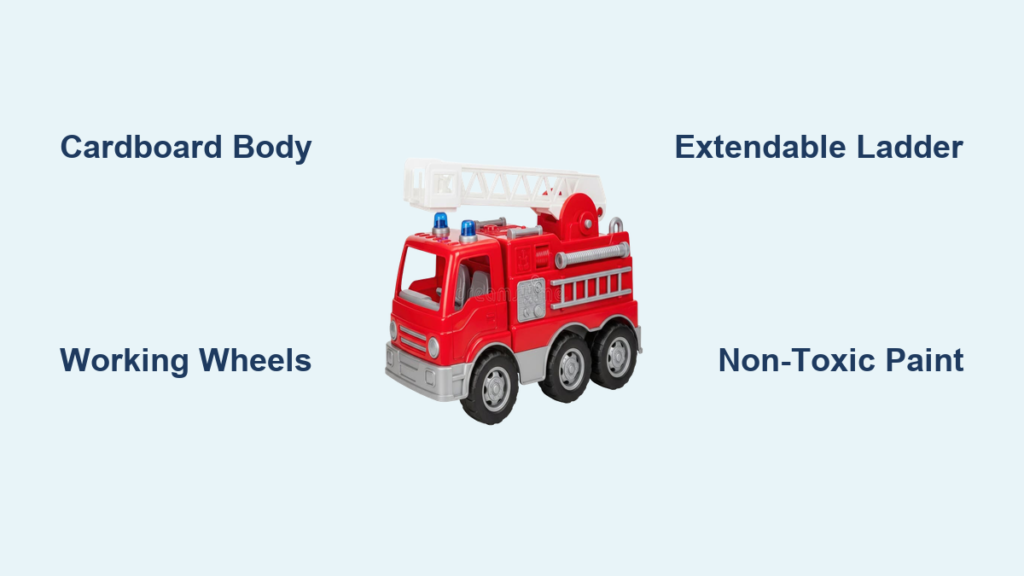
Nothing sparks a child’s imagination like a custom-made fire truck they can control. Whether you’re a parent seeking quality time with your preschooler or a crafty adult wanting to create a meaningful gift, building a toy fire truck combines creativity with hands-on learning. The perfect toy fire truck balances durability for rough play with authentic details that inspire realistic emergency scenarios. This guide walks you through creating a toy fire truck using accessible materials that withstand hours of imaginative rescue missions while looking professional enough to display proudly.
Select Your Ideal Fire Truck Materials for Age-Appropriate Play
Before cutting your first piece, determine the right materials based on who will use your creation. A fire truck for a three-year-old requires fundamentally different construction than one for a collector’s shelf. Toddlers need large, unbreakable components without choking hazards—cardboard construction with thick walls works perfectly. For children aged six and up, wooden components add realism while remaining durable enough for active play. Adults building display models can incorporate advanced features like working ladders and LED lights.
Cardboard remains the most accessible material for beginners. Standard shipping boxes provide structural integrity, while cereal boxes work for decorative elements. When using cardboard, reinforce joints with triangular cardboard braces and seal with Mod Podge for water resistance. For wooden versions, basswood offers the best balance of workability and durability—its fine grain accepts paint well and resists splintering during play. Avoid balsa wood for children’s toys as it breaks too easily under pressure.
Pro Tip: Save empty plastic containers like detergent bottles for curved body parts. Their smooth surfaces accept paint beautifully and create aerodynamic shapes impossible with flat cardboard.
Build a Cardboard Fire Truck Body in 5 Simple Steps

Measure and Cut Body Panels with Precision
Start by measuring your main body dimensions: 8 inches long × 4 inches wide × 4 inches tall creates a medium-scale model perfect for active play. Cut two identical side panels, a bottom panel, and a slightly smaller top panel to create a subtle overhang. The front and rear panels each measure 4×4 inches, with the rear panel featuring wheel well cutouts if adding separate wheels.
Apply wood glue along all joining edges, pressing firmly for 30 seconds at each seam. Reinforce every interior corner with triangular cardboard braces—this simple step prevents structural failure during rough play. Allow 2 hours for complete drying before proceeding.
Construct the Cab with Visible Windshield Details
Create a cab measuring 4 inches deep × 3 inches wide × 3 inches tall by cutting five panels (floor, two sides, roof, and front). Cut a 2×1.5-inch windshield opening in the front panel, covering it with clear plastic packaging material for authentic glass appearance. Attach the cab to the main body using generous glue application, supporting the joint internally with cardboard braces.
Critical Step: Wrap the cab-to-body joint with masking tape once the glue sets—this creates a smooth transition that accepts paint evenly and prevents separation during play.
Create Working Wheels and Ladders Without Specialized Tools
Make Durable Cardboard Wheels That Roll Smoothly
Cut two 3-inch diameter wheels for the rear and two 2.5-inch wheels for the front using a compass or circular template. Stack three cardboard layers per wheel, offsetting each layer slightly for visual depth before gluing together. Punch centered holes using an awl or nail—these must be slightly larger than your axle diameter to allow free rotation.
Use 1/4-inch wooden dowels as axles, extending 1 inch beyond each side panel. Insert axles through the body, then attach wheels with a small dab of glue only on the axle ends—never glue wheels to the body, or they won’t rotate. Add decorative hubcaps cut from bottle caps or additional cardboard layers painted silver.
Build an Extendable Ladder with Realistic Movement
Construct the ladder from coffee stirrers or thin wooden dowels. Cut two 8-inch rails and four 2-inch rungs for the main ladder section. Glue rungs between rails, then create a second 6-inch ladder section. Connect both sections using a brass brad through the top rung, allowing extension and retraction.
Mount the ladder on roof brackets made from bent paper clips or small wire pieces. Position it at a 45-degree angle to simulate readiness for action. This simple hinge mechanism provides satisfying movement without complex construction.
Paint Your Toy Fire Truck for Professional-Looking Results

Prepare Surfaces for Flawless Paint Application
Skip this step and you’ll battle peeling paint during play. First, fill any gaps with spackling compound, sanding smooth once dry. Wipe all surfaces with a tack cloth to remove dust particles. Apply a coat of gesso primer, allowing 2 hours drying time before light sanding with 220-grit paper.
Common Mistake: Skipping primer on cardboard—unprimed cardboard absorbs paint unevenly, creating blotchy results that look amateurish.
Apply Authentic Fire Truck Coloring in Three Stages
Traditional fire trucks feature bright red bodies with white or yellow reflective striping. Apply base red color using spray paint for even coverage—work in thin coats with 20 minutes between applications. Three light coats beat one heavy application that drips and obscures details.
Once dry, add 1/4-inch white pinstripe tape along body seams for authentic reflective striping. Finish with black tires and chrome accents on hubcaps using metallic silver paint. A final clear acrylic coat protects your work from chipping during play—apply three thin coats with 4 hours drying time between layers.
Add Safety Features to Prevent Choking Hazards in Child’s Play
Eliminate Dangerous Small Parts for Young Children
Toddlers explore with their mouths—never attach components smaller than a toilet paper tube. For children under three, integrate ladders and accessories directly into the body rather than making them removable. Paint details instead of adding small decals that could peel off.
Seal all edges thoroughly with Mod Podge to prevent cardboard from fraying into hazardous fibers during play. Sand all wooden components until completely smooth—run your hand over surfaces to catch any splinters before painting.
Choose Non-Toxic Materials Certified for Children’s Toys
Verify all paints carry AP (Approved Product) certification from the Art & Creative Materials Institute, guaranteeing non-toxic composition. Avoid spray paints containing methylene chloride or other harsh solvents—water-based acrylics provide safe alternatives with excellent coverage.
When adding electronic features like LED lights for older children, completely encase batteries in sealed compartments requiring adult access. Never allow exposed wiring that could create strangulation hazards during play.
Troubleshoot Common Toy Fire Truck Construction Problems
Fix Wheels That Won’t Roll Properly
Binding wheels ruin play value completely. If wheels stick, check three potential issues: axle alignment, wheel bore size, and wheel well clearance. Misaligned axles create binding—ensure both sides extend equally from the body. Oversized wheels catch on body panels—reduce diameter by 1/8 inch. Tight wheel wells restrict movement—enlarge cutouts by 1/4 inch.
Quick Fix: Rub graphite pencil lead inside wheel bores—this creates dry lubrication that won’t attract dirt like oil-based lubricants.
Repair Separating Joints Without Starting Over
Failed joints typically result from insufficient glue application or premature handling. To fix, carefully separate the joint, clean off old adhesive, and apply fresh wood glue generously. Clamp firmly for 2 hours—use heavy books as improvised clamps if needed.
For high-stress areas like cab attachments, reinforce with masking tape wrapped around the joint after glue sets. This creates an invisible support layer that prevents future separation during rough play.
Customize Your Fire Truck for Personalized Play Value

Add Meaningful Personalization That Sparks Imagination
Transform your creation from generic toy to cherished keepsake by adding the child’s name or local fire station details. Use stencils to paint “Rescue 5” or “Station 7” on the side panels—these details inspire more complex role-playing scenarios during play.
Create a removable magnetic hose using thin wire coated in black tape—this simple feature dramatically increases play value as children “connect” the hose to imaginary hydrants. Add a small paper flag with the child’s name for the ladder platform to create instant personal connection.
Extend Play Possibilities with Basic Accessories
Build a matching firefighter figure using a wooden clothespin—paint the head and add a firefighter helmet cut from cardboard. Create a simple fire hydrant from a spool of thread painted silver with red details. These accessories transform your fire truck from a standalone toy into the centerpiece of an expanding emergency response system.
Pro Tip: Store small accessories in a compartment built into the truck body—this teaches children organizational skills while keeping components together between play sessions.
Final Thoughts: Creating Toys That Inspire Lifelong Learning
Building a toy fire truck delivers far more than a finished product—it creates bonding opportunities, sparks imagination, and develops fine motor skills through hands-on creation. The techniques you’ve learned apply to countless future projects, building confidence with each completed piece. Start with a simple cardboard version for young children, then progress to wooden models with advanced features as your skills develop.
Remember that imperfections add character—children often prefer toys showing evidence of handmade care over mass-produced perfection. Most importantly, involve your child in the process whenever possible; even toddlers can help with painting or attaching pre-cut pieces. These shared moments become cherished memories that last far longer than the toy itself. Your handmade fire truck isn’t just a plaything—it’s a catalyst for storytelling, problem-solving, and understanding community helpers who keep us safe.